skip to main |
skip to sidebar
 In the Sherlock Holmes stories, Conan Doyle describes the Diogenes Club as a place where odd and unsociable men go only to read the latest periodicals, all talk being forbidden. This was an exaggeration, but under the circumstances, the Club felt it was better to leave well enough alone, rather than risk drawing attention to activities which were, in both government and Club terms, unofficial and often diplomatically sensitive. Now, a century on, there is no longer a compelling reason to withhold the explanation as to what the great interest was in all that reading.
In 1891, a publisher named George Newnes had created The Strand Magazine, which quickly became the regular home for the Sherlock Holmes stories (he having first appeared in Beeton’s Xmas Annual). A self-made man from the Industrial North and a philanthropic exponent of “Muscular Christianity,” Newnes built a publishing empire with titles such as Tit-Bits, a popular-miscellany magazine now classed as a harbinger of ‘the New Journalism,’; the Review of Reviews, whose monthly digests of leading journals and magazines appealed to busy professional men; the Westminster Gazette (an evening paper printed on green paper); Country Life; and The Captain, one of those youth periodicals meant to inspire ideals of sportsmanship, fair play and Empire. (A Liberal MP from 1885 on, Newnes became Sir George in 1895, and a country gent with an estate in North Devon.)
Since 1891, The Strand Magazine has been the title familiar to Holmes fans the world over, but from it would come a longer-running spin-off, to which Club members frequently contributed, it soon becoming the most requested title in the Club library. This was The Wide World Magazine, which survived (later as plain “Wide World”) until 1965, outlasting The Strand by 15 years. Throughout the 1890s Newnes kept receiving articles from all around the world on travel adventures, colonial experiences, and the like, which didn’t fit in with The Strand’s cosmopolitan mandate. Such true-life outdoor adventure stories did find publication in other periodicals, but there was no magazine dedicated to suchlike. Thus in 1898 was born The Wide World Magazine, subtitled 'The Magazine for Men'. It has to be said this was nothing like the later American pulp men’s magazines, whose covers featured red-blooded action heroes and blondes in revealingly-ripped underwear, in some type of jeopardy such as Nazi torturers or crazed beasts.
WWM contributors included authentic explorers like the African explorer Stanley, and keen-minded travellers like Conan Doyle himself, who had wide-ranging interests. Most were amateurs contributing a single article on their experiences abroad, and each issue had articles describing first-hand experiences all over the globe (helpful diagram map provided each issue). Club members would lap up articles like ‘Queer Scenes in Sumatra’, ‘The Hasheesh Smugglers Museum’, ‘Savages At School’, ‘How We Hid The Nihilist’, ‘Klondike Pictures’, ‘The Queerest Fire Brigade In The World’, ‘Rock Climbing In Great Britain’, ‘Across Europe Without A Passport’, ‘The Motor Cab School’, ‘My Cycle Ride To Khiva’, and ‘How I was Buried Alive.’ These are all examples from a single bound volume, representing the first half-year’s worth.
The magazine’s commitment was to strange-but-true stories, but from the outset it was beset by the problem of verifying whether any given submission was indeed true, and they were soon the victim of hoaxes. The very first year, WWM’s ‘How I was Buried Alive’ by one Baron Corvo, proved the work of a now-famous literary fantasist, Frederick ‘Hadrian VII’ Rolfe. The same year was the more spectacular case of the self-proclaimed ‘King of The Cannibals’ who in a year-long series of WWM articles told how after being marooned off NW Australia he had spent 30 years among the aborigines. Newnes got the Royal Geographic Society to agree to sponsor talks by the author, Louis de Rougemont, and circulation soared. However certain details (like a reference to flying wombats) made knowledgeable club members suspicious, and they alerted Newnes, who foolishly tried to brazen it all out. The author soon proved to be one of those types who reinvent themselves every year with some new scheme, and was known to the Australian police as Louis Grin. It turned out Grin had added to his knowledge by spending time in the British Library Reading Room – something that helped convince the Club Secretary to stock all the major periodicals – not just The Wide World.
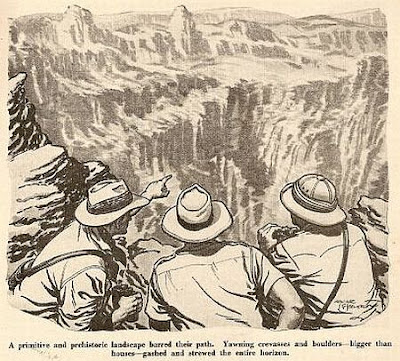
Newnes personally brought over a selection from his publishing empire for the Secretary to peruse. Of course it was Wide World that was most avidly read, with its focus on expeditions to remote territories – and the fact Club members would often know the authors. They would sit there for hours over a pot of coffee, entranced by accounts like “Exploring The Skeleton Coast,” “Australia's Mounted Police,” and “Killer Cats Of British Columbia” (to use 3 examples from one issue). The Reading Room, which was not large, would soon fill up, and even the front lounge was given over to reading rather than talking. The quite clubbable Conan Doyle had visited the Club one day in 1890 (the Secretary wanted him to join) and saw this for himself, later calling this behaviour “queer” in print. (The great man joined several other clubs, including the most prestigious, the Athenaeum.) Club members, who were often self-educated, self-made men like George Newnes, clearly did not think so, but did not try to change this view.
One reason for being circumspect was that in those days, travels to remote districts were often a cover for intelligence work. Too often, travellers who kept diaries and sketchbooks or took photographs were arrested as spies, and some indeed were. Newspaper tycoons would openly finance expeditions with political ambitions, and even try to stir up colonial wars. (Many readers will be familiar with US tycoon William Randolph Hearst’s role in helping foment the Spanish-American War of 1898, and Evelyn Waugh’s satiric novel Scoop, based on his experience as a war correspondent in 1930s Abyssinia.) Similarly on the exploration front, Stanley’s explorations to find Dr Livingstone were backed by a newspaper (Gordon Bennett’s New York Herald), which led to the Belgian king offering him a chance to run the Congo as a slave colony.
Over the years, there were endless press-involved expeditions to remote regions from Asia to the Poles - any of which might lead to a diplomatic claim to the territory, accusations of spying, and possibly even a war with rival powers. In 1898, to help kick-start WWM, Newnes had financed an Antarctic expedition, after the Royal Geographical Society spent years in political wrangling over details, and had himself filmed seeing the expedition off. Ironically, the news was knocked off the front pages by sensational tales of the hoaxer Louis de Rougemont, by then taken up by other newspapers. But there would be another six decades of Wide World expeditions, some no doubt with covert backing – and the help of other well-placed Club members. For a long time “DC” was not used just the Club’s initials, but was short-hand for “Decent Chap” – a man you could trust with your life (and who wasn’t afraid to smoke a pipe either).
A few of these Club-backed expeditions have become legendary within the Club portals, and now the protagonists are all safely dead, perhaps we can recount a few tales someday soon... Such behind-the-scenes arrangements have mostly never come to light since the archives of Wide World, which included correspondence with many great men of the time, mysteriously disappeared during WWII, after they were put in “deep storage” during the 1940 invasion scare. Perhaps it is no surprise they never resurfaced. There would have been Whitehall concerns that colonial history would have to be rewritten in places. Even today, the entire clutch of issues raised by the WWM - what was real, what was propaganda, who was financing an expedition, what its real aims were etc - remains touchy. The compiler of a recent reprint-anthology (an English lecturer described as “long obsessed with the treasure trove of Wide World Magazine”) had to use a pen-name to protect his identity, and his anthology, published by Macmillan, vanished from print so quickly that searching for it on Amazon showed no results.

Another sensitive factor was the secret existence from 1898 to 1948 of the WWB – The Wide World Brotherhood, set up 'to treat fellow members as brothers and, if need arises, give them any help possible'. Until 1949, the WWB was kept a secret from ordinary readers, known only to contributors. Among these were of course many Club members, who were able to use it when in remote ports, on expeditions and cruises often diplomatically sensitive and not officially supported. After 1949, the WWB was turned into an organisation open to any reader who undertook its guiding principle of helping other Brothers as “a solemn pledge.” The magazine explained “The WWB is a fraternity of men and women of goodwill, linked by the common bond of a love of travel and adventure.” The magazine also published looking-for-pen-friends lists, so members could contact one another.
There was no fee, the only cost 5 shillings for a discreet gilt and enamel buttonhole badge to identify oneself to others in the Brotherhood. There was a brooch for lady members, of whom there were soon a surprising number (it turned out they were being encouraged to join by love-starved bachelor Brothers.) These identification pins could of course be worn strict school-uniform style, i.e. on the underside of the lapel, if discretion was wanted. You also got a certificate of WWB life membership, and could also purchase a pure-silk WWB tie (British-made, of course) and silk ‘muffler’ cravat. There were also heraldic-style shields and seals that could be variously mounted around den or office. Motoring members could obtain a windscreen sticker and a pennant that bolted onto the radiator cap.
Throughout the century, the world became less and less an unknown region, and soon the magazine became more for the armchair ‘adventurer’ (and today, a nostalgic collectable). The WWB developed a domestic version, becoming the basis of small local social groups here in England. They would meet in corners of quiet pubs and go on modest outings by motor car into the depths of the countryside - much as we still do today.
Since one of our newer (ahem) members has let it slip the Club was actually founded 232 years ago, i.e. in 1776, rather than its much later officially publicised founding date (when it first moved into its own premises), it has become necessary to clarify a certain matter. What follows will hopefully put into perspective talk of the Club being first established as an "underground" organisation or secret society.
The year 1776 was a critical one in British affairs, with the Americans breaking away, largely over the Customs duty on tea, leading to the so-called Revolutionary War Of Independence. Certainly the price of tea and coffee was a concern here too, for before gentlemen's clubs existed as separate entities, the coffeehouses of London were where men met to read the latest periodicals and discuss affairs of state.  In Britain, there were many affected by the gap between the wealthy few and the needy many, and talk of revolution was in the air. This was also the year of Adam Smith's textbook The Wealth Of Nations, introducing market principles like supply and demand, and the idea of the "Free Trader." The coffeehouses of London became conversational battle grounds for the cut and thrust of fierce political debate over new ideas like the res publica, the rationale of public ownership and republican government. Soon they also became recruiting grounds for government agents looking for men to spy on perceived enemies at home or abroad, or to act as agents of influence, to promote one ideology or another.
As in every age, there were men who preferred to stand above all this, who wanted to be independent, not drawn into the political ideologies and changing alliances of the day. They were nonetheless pestered by nosey parkers sounding out their views, or beset by clumsy attempts at recruitment by men who often flew false flags or were double agents.
A small group of them decided to hire, by the evening, a private upstairs dining room in one or another of London's many inns, where they could meet monthly in peace for intelligent conversation, while avoiding the divisive and constricting subject of politics and its cousin, religion. In order to protect this strict protocol from abuse, each member would adopt a "covering" identity to conceal their actual name and position, the conversational equivalent of the disguise in the then-popular masqued ball. The names chosen were those of Classical philosophers. "Diogenes" was reserved for the annually-elected club president, after the founder of Cynicism who held political ambition in such low regard he told off Alexander the Great. Other members chose names like Socrates or Pythagoras.
As new members were forced to take increasingly obscure names, the basis was broadened to include other cultures. With the antiquarian revival in progress, names were chosen from Celtic myth, like Merlin and Gawain, and this also brought with it the idea of using a round table for meetings, for the number of members had grown by now from the original four to thirteen. Thus was born, in name at least, the Diogenes Club - or rather our Diogenes Club, for there are of course now others, of which we do not speak.

For a dozen years all went well, but in the 13th year, events in France forced a change in Club protocol. Britain's long-time enemies the French had supported the Americans in their revolution; France's own radicals had grown in power and now, in 1789, overthrew their Royalist state, leading to a decade of terror across the Channel. The Continent was cut off - the gentleman's Grand Tour of spas and art galleries no longer possible. Newspaper reports and the influx of thousands of French émigrés telling tales of endless purges and executions by guillotine, and a growing fear of invasion made a lofty disdain for worldly affairs more difficult to sustain for men of a certain calibre.
Members grew sombre and spoke more quietly; the gentle good humour of past meetings vanished. The news became all-important. Members brought the latest newspapers with them and pored over them for hours, looking for clues or hints as to what might be going on, or might happen next. What had been a jovial dining club turned into a reading room where members read even during meals, and only muttered conversation was heard. This was one reason the Club would abandon meeting in inns and become a club proper with its own premises, as it became more a private library, stocking the latest periodicals as well as rare books which were bequests from members, who were often well-travelled.
Then members began to disappear two or more at a time, returning tight-lipped as to where they had been. Sometimes they were limping or bandaged up, and it soon became obvious these private cabals had abandoned neutrality for unauthorised intervention abroad. But it must be stressed that this was never part of the Club’s official mandate. It was not within the founding principles of Diogenarianism to try to - in the popular phrase -- "set the world to rights." Other members felt the aristocracy had brought disaster on themselves by their own lack of moderation.

And so these taciturn returnees said merely that they had been away "taking the waters," had had a carriage upset or some such accident. Even the Club president, the 14th "Diogenes", by profession a botanist, reappeared one day with his cheek gashed by a sabre cut, which he explained away as a boating or bathing accident while on holiday down on the coast at Mudeford.
By now, members knew better, and a protocol developed that no one would ask questions in the club room, lest the answers prove awkward. The author Conan Doyle must have heard of this oddity, although he either did not know, or care to write of, the real reason behind it – or perhaps treated it as an insiders’ joke. For in his Sherlock Holmes stories, he merely says the Diogenes Club is a place where members go to read the latest periodicals and nobody is allowed to talk!
Yet soon after this, someone must have talked, for details of such unofficial cross-Channel exploits were dramatised in popular plays and novels. These were written by an émigré aristocrat living in London, but who was never a Club member, being a woman. She was the Baroness Orczy, and she wrote of a gentleman adventurer, Percy Blake, whose private codename was Diogenes. He operated as a political intriguer with a pair of companions, codenamed Socrates and Pythagoras. She put his exploits in the 17th C., claiming this 'Diogenes' was the real identity of the subject of the famous painting The Laughing Cavalier.
She also wrote of his more recent descendant, Sir Percy Blakeney, who took his codename from a flower he used as a seal - the Scarlet Pimpernel. To help spirit away political prisoners from the shadow of the guillotine, the Pimpernel also has his own "League" of a dozen or so volunteer helpers. Through her hit stage play and the dozen stories that followed, the Baroness was credited with introducing in popular literature certain now familiar situations. This includes the idea of the 'league of extraordinary gentlemen' who lead a double life, playing the aloof or hedonistic clubland gentleman while secretly risking life and limb, operating abroad as agents under a code name in order to put the world to rights.
... Not that we do that sort of thing any more, of course.
In Conan Doyle’s novel The Lost World, the young reporter Malone is told by his beloved Gladys she could never marry a man without the fame and sense of adventure of the sort demonstrated by explorers like Stanley and Burton. So to prove himself, he signs on to accompany the expedition to the ‘lost world’ jungle plateau with its living dinosaurs. After many adventures, he returns successful, to find Gladys has married a solicitor’s clerk.
Whether Conan Doyle was out to prove anything, to himself or the women in his life, is a moot point. He never quite became an explorer, though he had both the physique and the temperament to test himself against challenge and material privation, in what today we would call adventure travel. As he told his mother early on, "I've got a strong Bohemian element in me," he wrote her on one of his early voyages, "and the life seems to suit me."
His wanderlust would have qualified him for membership in the prestigious Travellers Club (where you had to have travelled at least 500 miles in a straight line from London to join) even before he turned 21 and completed his degree.
For while still a medical student, he had travelled to Austria to study, as he would later in life. In his final year of study he signed on as a ship’s surgeon on a whaler bound for Greenland waters. Harpooning sperm whales in boats launched from a sailing ship was a dangerous business (Moby Dick was inspired by a real incident). Doyle also spent days leaping between ice floes, falling in several times while trying to kill seals. He signed on for another voyage, this time to the “White Man’s Graveyard” of the West African coast. While swimming around the ship, he was ‘nearly eaten by a shark’ and the ship caught fire on its return voyage.
In 1892, now a fulltime author, he went on a horseback trip in Norway, visiting a leper colony, and trying to speak Norwegian – something that cost him his horse, which he accidentally gave away.
He was a lifelong sports enthusiast, and it was an 1893 trip to the Swiss Alps to take his consumptive first wife Louisa to a sanatorium that led to his popularising skiing – then not a recognised sport. (A trip to a dramatic local waterfall on this same visit also gave him the idea how, at last, he could kill off Holmes.)
In 1896 he sailed 800 miles up the Nile on a tour boat which was fired upon by disaffected locals, risking capture by hostile Dervishes. He also crossed overland by carriage to visit a remote Coptic monastery on the edge of the Nile Delta.
In 1898, when Kitchener’s army began to advance up the Nile to take Khartoum, he signed up as a war correspondent and travelled south by camel into the Sudan to a desert fort, returning frustrated at the lack of immediate action.
In the Boer War, he tried to sign up as a private, but (being 40) was rejected and so (like Watson) became an Army doctor, saving lives in a typhoid epidemic.
On the voyage home from Africa, he met Bertram Fletcher, who gave him the idea for his 1902 Holmes comeback novel The Hound Of The Baskervilles, with its bleak Dartmoor setting, which he enjoyed exploring on foot, looking for sites which would figure in the story.
In 1902 he also took up ballooning, then flew in a biplane in the hope of making the first parachute jump.
He was also a keen early adopter of the new automobiles and motorbikes, despite a serious crash in 1904 where only his physique saved him from being crushed by his overturned Wolseley tourer. (As well as boxing, cricket, skiing and snowshoeing, he also practiced hill walking and rock climbing.) In 1911, he joined the Royal Automobile Club's racing team in a rally called the Prince Henry Tour, where some forty British drivers raced from Cologne to Southampton to Edinburgh to London against fifty Germans, a contest that nearly ended in a mass brawl when the British team won.
His 1912 The Lost World was partly inspired by his sighting, on his honeymoon cruise in 1907 with his 2nd wife Jean, a sea monster he identified as an ichthyosaurus.
In 1914, he visited the Canadian Rockies, riding, fishing, walking – though now travelling in more comfortable style, for he was now 55.
After the war, he kept travelling, mainly to promote his pet cause of Spiritualism. In 1928 he spent five months travelling around southern Africa, hunting and sightseeing. His final trip was a tour around ‘Protestant’ Europe, which he had to cut short due to chest pains. As a doctor, he knew what that meant, and he confined himself thereafter to his Surrey home ground. Then he went on what as a Spiritualist he regarded as the greatest adventure of all, dying peacefully in his garden in 1930, aged 71.
Today people travel from all over the world to Minstead in the New Forest to visit his gravesite. In 1925, he built a final home near here, where the postman would not deliver letters due to the rumours of strange goings-on - seances and suchlike. But for a fire in 1929, he would’ve died here. His family duly had his coffin and his wife Jean’s relocated here, in the heart of the New Forest, setting of his own favourite among his novels, the mediaeval romance The White Company. His tombstone bears the knightly epitaph “Steel true, blade straight.” This was from a poem by Robert Louis Stevenson, a tribute to his own spouse. Another RLS poem, ‘Requiem,’ might have been equally apt for Conan Doyle: ‘Home is the sailor, home from the sea, And the hunter home from the hill.’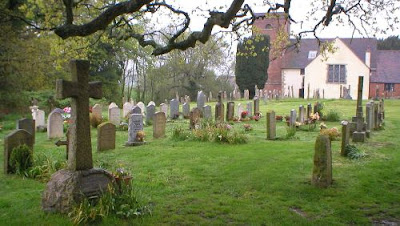
Last time, I raised the question whether there could have been a real-life Victorian counterpart to Conan Doyle’s fictional Diogenes Club. That is, how he might have been inspired by the fact London gentlemen’s clubs were also often travellers’ clubs that were a home-away-from-home for returning explorers, who often patriotically collected intelligence for the Foreign Office. Holmes himself, after faking his death at Reichenbach Falls, goes off travelling for several years, to Tibet (disguised as an explorer called Sigerson), to Persia, on to Mecca (in Arab disguise, obviously) and then off up the Nile to Khartoum for a political interview with the Khalifa, returning with information for the Foreign Office.
Conan Doyle’s stories have the Club’s co-founder Mycroft Holmes as a major player in Whitehall, but there is nothing in the original canon about the Club being an intelligence front or cover for sending out expeditions. Whitehall of course always had a stake in exploration, for Britain would have a territorial claim if a British explorer planted the flag somewhere in remote unmapped territory. These explorers were men who would go out and live a lifestyle as basic as that of Diogenes, returning with useful intelligence which would help expedite colonisation. This was how the Empire developed, in the path of men such as Sir Richard Francis Burton and John Speke, whose 1856-8 Nile expedition nearly cost both men their lives. Their joint expedition was officially to ascertain the truth of the report by Diogenes the ancient Greek explorer that the Nile arose from lakes fed by snow-capped peaks on the Equator. In reality it was sponsored by the Foreign Office, acting through the Royal Geographic Society.
.jpg) Thus in reality, there would have been no need for Whitehall to set up an entire front organisation to despatch ‘civilian’ expeditions to the remote frontiers of Empire to gather military and political intelligence. The Royal Geographic Society in London provided such a semi-official function, from 1830 on, and distinguished explorers had a private London base at the Travellers Club, where they could stay. Both institutions still exist, the authentic originals of Conan Doyle’s Diogenes Club.
Thus in reality, there would have been no need for Whitehall to set up an entire front organisation to despatch ‘civilian’ expeditions to the remote frontiers of Empire to gather military and political intelligence. The Royal Geographic Society in London provided such a semi-official function, from 1830 on, and distinguished explorers had a private London base at the Travellers Club, where they could stay. Both institutions still exist, the authentic originals of Conan Doyle’s Diogenes Club.
Some explorers, like Burton and later TE Lawrence, would go out for extended periods in native disguise – real-life counterparts of Kipling’s Kim in India and The Four Feathers’s Harry Faversham in the Sudan. (Burton’s visit to Mecca, if his native disguise had been uncovered, would have got him killed.) Even when there was no need to travel as a native, conditions in the field were often so appalling that they made Diogenes’s lifestyle look comfortable. RGS members like Stanley and Livingstone, Shackleton, and later Sir Edmund Hillary became national heroes whose accounts and lectures gripped the nation with their descriptions of hardship, from being mauled by a lion (Livingstone) to having the expedition’s ship crushed by Antarctic ice (Shackleton).
Conan Doyle himself was also publicly associated with exploration through his classic 1912 adventure novel The Lost World, wherein his hero Professor Challenger explores the real, but then almost-inaccessible, Venezuelan plateau of Mt Roraima, and discovers an evolutionary pocket where apemen and dinosaurs co-exist. Mt Roraima was another example of politics intruding on exploration, for it stood on the Venezuela-British Guiana-Brazil boundary, and a few years before Britain and the US had been rattling sabres over the issue. The US claimed it was in their sphere of influence, but it was ‘discovered’ in 1838 by Robert Schomburgk, who was German born but sponsored by the Royal Geographical Society; the first ascent, in 1884, was by a British colonial official, Everard im Thurn. Later President of another expedition-sponsoring body, the Royal Anthropological Institute, he gave a lecture on Roraima attended by a young Conan Doyle. The future author of The Lost World would leave the comfortable world of London clubland to head off on his own less well-known outdoors adventures across the globe – of which more next time.
The idea the Diogenes Club was a Whitehall front organization was first expressed explicitly in the 1970 film The Private Life Of Sherlock Holmes. It is otherwise a reader’s inference from its odd description in the original Holmes stories. There, the Club is supposedly just a refuge for unsociable gentlemen to come and read the latest newspapers and magazines (which no doubt were carefully ironed to remove creases from previous handling). This at once seems rather a thin premise for a club - other clubs had reading rooms with similar no-talking rules. And how would you order drinks, or the meals of which Sherlock’s sybaritic brother Mycroft was so fond? (In one of the Granada TV adaptations, he tells Sherlock and Watson the Club does oysters rather well.)
Victorian gentlemen’s clubs were famous for being a “home away from home” where men could dine, play whist, socialise with other men (no women allowed) and even stay overnight. This led to them being popular with travellers who could actually use it as a private hotel between trips. In the Victorian era, such institutions became important as it became common for gentlemen to have business or other reasons to travel to distant parts of empire, or explore beyond known frontiers. The Royal Geographical Society began life in 1819 as a dining club where world travels could be discussed over coffee, port and snuff. It soon received its royal charter from Victoria, and backed a lengthy, high-profile, and contentious series of expeditions to discover the source of the Nile as recorded on Ptolemy’s maps. 
The maps were based on the account of Diogenes the 1st-C Greek trader who explored this part of Africa - see earlier entry here. The source was supposedly amidst the ‘Mountains Of The Moon’ which got their name from their pale colour. (“Snow-capped mountains and glaciers on the Equator! By gad, sir!”) The expeditions excited public interest in far-off places, and made its most-travelled members, explorers like Burton and Speke [pictured], into popular romantic heroes, and launched the Victorian ‘scramble for Africa’.
By this time clubs specifically catering to world travellers had been formed. The Reform Club, set up for Liberal politicians and later (when the Liberals declined), dominated by senior civil servants, was the first to offer members bedrooms. The Reform Club is best-known to the public for its role in Around The World In 80 Days. The 1956 film was scripted by SJ Perelman, a distinguished American humorist who had been paid by a magazine in 1947 to follow Fogg’s round-the-world route. It actually satirises the stuffy, no-talking atmosphere of such clubs. To set the scene at the Club, we see a ginger cat flitting silently by along a far wall. A member points and complains (I’m quoting from memory here) “Must we have that infernal creature thundering about the place stamping its paws?” For the rest of the film, club members follow Fogg’s travels by comparing accounts in The Times versus the Daily Telegraph.
Like the Reform Club, the Travellers’ Club was a palatial building designed by Sir Charles Barry, the man who had designed the new House of Commons in 1834, and classical trimmings were used for prestige. Though it did not take on a ‘Classical’ name like the Athenaeum (and of course the fictional Diogenes Club), its heraldic ‘device’ was Ulysses, whose head adorned the building’s facades. The Travellers’ Club Library (original home of the London Library) was decorated with marble trimmings taken from a Greek island Temple of Apollo by a founder-member. Travellers’ Club membership numbers were limited, and only those who had travelled at least 500 miles (on the map) from London were eligible to join, those having the most ‘club miles’ being explorers and other regular travellers to Britain’s far-flung Colonial frontiers, namely officials from the Colonial Office. The Travellers’ Club was also used for international meetings of diplomats and politicians.
Thus was set the scene for the use of these clubs for purposes other than reading and eating oysters. Conan Doyle would know this world, being a member of the prestigious Reform Club, while the Travellers’ Club stood next door to it on Pall Mall, between it and the Athenaeum. Conan Doyle also became a member of a more adventurous organisation whose members explored, mapped, patrolled, intrigued and fought for the interests of Empire, on its remoter frontiers. (More on this next time.)


.jpg)

