Treworthy was holding forth when I arrived at the Diogenes club. I was a little late and the discussion had clearly already started. As I handed my coat and hat to Henry, I could hear his normally optimistic tones issuing from the library.
I lowered myself into an empty armchair next to Travis and waited for Henry to bring me a drink.
"He's off on one of his environmental crusades again." said Travis, as he opened his silver cigarette case, and proffered it in my direction. I waved my hand in refusal, having recently decided to try and give up – again - as I could feel my body becoming less and less forgiving as I plummeted headlong into middle age. Travis clearly had no such qualms, being the youngest of our group, and he took one for himself.
"He does it deliberately to annoy Manton, if you ask me" I said, as Henry approached, carrying my whiskey on a silver salver. "Thank you Henry."
"Ah, I was wondering when you were going to get here. Yes, he does seem to be projecting his hatred of his ex-wife onto Mother Nature herself at the moment." said Abrahams, rousing himself momentarily from his crossword. "Let me know if either of them says anything worth listening to.
The other two were oblivious to my arrival.
"Any right thinking person thinks that the state of the environment is of extreme importance, you included." said Treworthy resolutely,
"Treworthy, do I look like a bloody hippy?" thundered Manton.
"An overweight, red-faced, cigar-smoking, whiskey-gulping hippy." interjected Travis, adding quickly "if that is of any help." when he saw the look on Manton's face.
"It is not." said Manton, without taking his eyes off Treworthy. "Listen Treworthy. I am not against recycling, or whatever other inane schemes the government comes up with, I just don't think that they will have the slightest effect on the welfare of the planet. We are all doomed and it is no better than we deserve. I personally intend to indulge my every whim in whatever time that I have left to me, without any regard for my fellow man whatsoever."
"I cannot believe that you entertain such nihilistic beliefs, no matter what you say in public."
"I say it again. We are doomed, and it is no better than we deserve."
"Reasoning, Manton, give your reasoning." muttered Abrahams, without even bothering to look up from his crossword.
"Alright. Let's just take one simple example. The best idea that we seem able to come up with is carbon offsetting. This is meant to be how we are going to save the world."
"So – what's your point?" I asked. "I don't really understand the idea, but it seems to make some sort of sense that we should try and make people responsible for the amount of pollution that they produce."
"Well the trouble is, it's not about that at all. Let's look at it from a different angle. Let's say that we decided to introduce a tax on fat people."
"Can't say that old boy. It would be size-ist. Or fat-ist." said Travis.
"Speaking as someone who would almost certainly be in the supertax bracket, I am free to be as size-ist as I want."
"Well that is something we can both agree on." said Treworthy, slightly annoyed that he seemed to have lost control of the argument.
"The thing is, it wouldn't actually be a tax on being fat." Manton warmed to his theme. "If it was, it might actually cause people to try and lose weight. No – the point of it would be to make fat a commodity."
"How and why would you do that?" I asked, as I gestured to Henry to refresh my glass.
"Well, you tell everyone in the world that they have a certain number of fat credits. You have to come up with an average figure for how fat everyone is allowed to be, and anyone who is less than that gets fat credits up to that amount."
"And presumably this figure is based around a healthy body-weight ratio." enquired Travis.
"No, not really. Well it can be, but you must make sure that most of the people in the world fall well below that average figure."
"Why?" I asked.
"So that they have got plenty of fat credits that they don't need."
"Good God! Manton, that is brilliant." exclaimed Travis.
"What is?" said Abraham's, his crossword momentarily forgotten. "Look Travis, just because you work in the City every day, it doesn't mean that the rest of us have any idea what Manton is talking about."
"He can tell it better than I can. Go on Manton." Travis pulled a notebook out of his inside pocket and started to scribble down calculations.
"Wait a minute." Treworthy had a frown on his face. "If the average figure is tied to a healthy body-weight ratio, and if it is important that most of the people in the world fall well below that average figure, that would be mean that most of the world would have to be on the point of starvation."
"And why would that be a problem?" said Manton. "It is no more than a reflection of the world as it is today, is it not?"
"Oh for God's sake Manton." Treworthy launched himself out of his chair in disgust and stalked out to the bar.
"Manton, you're doing this deliberately to annoy him. Admit it."
"I assure you I'm not. I can't help it if he has a ridiculously high opinion of his fellow man."
"Compared to you old boy, everyone has a ridiculously high opinion of his fellow man." I said.
A few moments later, having calmed down, Treworthy returned carrying a drink.
Manton sighed. "Alright, let's say that the magic figure is set a bit higher. It doesn't really matter."
"But wouldn't that negate the whole point of the scheme?"
"Not at all. As someone who enjoys life to the full, my weight puts me over the magic figure. I have two choices. I can either lose weight, or I can buy the fat credits off someone who doesn't need them. They get money, and I ostensibly get a bit more time in which to lose weight.
"But they don't exist." spluttered Abrahams. "You can't create something out of thin air and then sell it to someone else."
"My dear fellow, Travis does it in the City every working day, as do thousands of his colleagues. That's what makes the world go round."
"He's right. We just give them better names, like 'leveraged gilt future equity bonds' or something equally meaningless." Travis was quite excited. "Manton, this is the stuff of genius. I could actually make this work"
"And the best of it is that nothing changes." Manton drained his glass. "I can remain overweight, but free of guilt. Indeed, I can feel proud that I am doing my bit to make the world a better place, by helping to turn my fellow man into a copy of me by giving them the money to buy food."
"But if you do that, at some point they won't have any fat credits to sell because they won't be underweight." said Treworthy. "They you would have to lose weight."
"I don't think so. I think you would find that there would be a move to increase the fat-average figure so that they are all underweight again."
"Standard practice in the City old boy." said Travis. "Listen Manton, do you want to go into partnership on this? Fat credits. I'm amazed no one has thought of this before. We could even sell fat credit futures. Get people trading on which way the fat-average figure was going to move. The sky's the limit."
"This isn't very helpful when it comes to losing weight, is it." I observed.
"Yes but that's just it. It's not about losing weight. That's just the cover story. If the government really wanted people to lose weight, they would just tax everyone who was above a certain weight. No buying and selling of anything." said Manton.
"This is ridiculous Manton." interjected Treworthy. "It doesn't apply to carbon offsetting anyway. People being fat isn't endangering the planet."
"No, it just endangers their own health. But no government is ever going to suggest such a tax of course – it would be political suicide."
"But it could be made to work for pollution." said Abrahams. "If it was just a straight tax, and no trading was allowed."
"No that won't work" said Treworthy, his voice suddenly sounding tired. He looked over at Manton, resignation in his eyes. "Will it."
"No, I'm rather afraid it won't."
"But why not?" asked Abrahams.
"Because any company producing pollution will just work harder, in order to produce more profit. Thus enabling them to pay the pollution tax." Treworthy sighed.
"Which will just cause more pollution. Yes, I see." said Abrahams.
"Which brings me back to my point. We are all doomed and we don’t deserve any better. QED." Manton lifted his glass to find that it was empty. "Where's Henry?"
Treworthy rubbed his eyes. "Damn you Manton, can't you ever be wrong?"
"If you can show me where my reasoning is flawed, I would be extremely grateful Treworthy. I have no desire to be right in this particular case. You were right in that respect, at least. If Henry can be located, I will gladly buy you a drink to show that there are no hard feelings." His eyes scanned the library. "Where the devil is he?"
The library fell silent for a while. Treworthy seemed depressed, and I was trying to find a flaw in Manton's argument but failing to do so. The only one who seemed unaffected buy the general air of gloom was Travis, who was now punching figures into a small pocket calculator.
"Listen chaps. If everyone here agrees to keep their mouths shut on this until I can make a few phone calls, I think we could make a real killing on the markets. I'll cut you all in. What do you say?"
No one answered.
"What about you Manton?"
"No, I don't think so Travis. It wouldn't sit well with me, but by all means go ahead yourself. I give the idea to the world free of charge for anyone to make use of, as they see fit."
"As you wish. Will everyone at least agree not to breathe a word of this to anyone else until I am able to register the idea with the Regulatory Trade Commission?"
Everyone mumbled their assent.
"Excellent, I'll ring Alan after we've eaten."
"Dinner is served, Gentlemen." said Henry, who had just appeared at the door.
As we walked through into the dining room, I heard Manton reprimanding Henry for being absent.
"I do apologise sir. I had to make a quick telephone call."
"Well it was damned inconvenient."
"Yes sir. Do you still require a drink sir?"
"Yes, and one for Treworthy too."
"I shall bring them through to the dining room sir."
As Henry was placing the drinks on the table, Treworthy turned to him.
"What do you think about the all this business, Henry."
"Business, sir?"
"You know, the environment. Pollution. Global warming."
"Well I'm sure that when the time comes, we will get the end that best justifies our means, sir."
Sunday, 17 February 2008


Friday, 25 January 2008
Ghosts Of Winter Past
At our last club meeting over the Xmas break, conversation turned to how today Xmas is so materialistic that the year-end holiday has become such a stressful time. A time when the emergency wards, mental hospitals, and the morgues fill up, with a waiting list even to have your relatives buried. Everyone had personal news or anecdotes of their own regarding this, but after a while the conversation turned to seasonal themes. Not merely the indulgence or distraction of Xmas festivities but their underlying origins in symbolic rituals and of death and resurrection – the death of the old and then rebirth in the new, as recorded in Sir James Frazer’s massive study in comparative anthropology The Golden Bough, which documented customs from around the world.
It came up that every culture had a penchant for winter-evening ghost stories or other such supernatural tales, told traditionally around the fire on those long dark midwinter nights. (When I once produced and presented an “Armchair Storytime” series for local TV to promote literacy, I insisted we shoot it with a fireside setting to make it work.) The modern counterpart for many years was that BBC TV would put on an annual Xmas-holidays ‘ghost’ story. These were usually from the stories of MR James, and the tradition continued this year with a series of MRJ stories dramatised for Radio 4.
Although Dickens authored the best-known such Xmas ghost story with his anti-materialistic parable of Scrooge haunted by the ghost of Xmas past etc., MR James was the recognised Father of the English Ghost Story. His stories usually tell of visiting scholars or 'antiquaries' who inadvertently stir up some ancient presence in a haunted locality by digging up a Templar tomb, reading aloud an invocation from an ancient Gnostic manuscript, etc. It was his use of a story-within-a-story framework, often in a club setting, that gave the stories their verisimilitude, a setup since copied by others. Typically, one of the club members sitting around the table is reminded by some snippet of gossip of a strange tale regarding an acquaintance. Over brandy and cigars, he tells the story, then caps it off with a report of how the unfortunate man had disappeared, died mysteriously, or been found stark raving mad the next morning, clutching a piece of paper on which were written only the enigmatic words … well, you get the idea.
I’ve written elsewhere about MRJ and his work, including a possible influence on the Holy Blood Holy Grail mystery. Here, I’d suggest, as a suitable winter‘s-eve supernatural tale, a mystery revolving around a real-life place named after Diogenes – Mt Diogenes in Australia. Why it was thus named is obscure – all we know is the colonial map-maker was keen on the ancient Greeks, and we don’t know if it was named after Diogenes the Cynic or Diogenes the explorer whose work Ptolemy used in his maps of Africa. The story is known worldwide via a cult 1967 novel and a 1975 film version, which use in its title the local name for Mt Diogenes, Hanging Rock.

Hitchcock once disavowed night-time and dark alleys as a clichéd sinister screen setting and said that what was more frightening was to have terror descend out of the blue in broad daylight, as he demonstrated in his colourful thriller North By Northwest (the title is from Hamlet, a reference to madness). The setting of Picnic At Hanging Rock is similarly sunlit and eerie. (Down under, our traditional European seasonal calendar is of course turned upside down, with Dec-Feb the hottest months.) A party of girls from an upper-crust boarding school nearby go on an educational excursion to Mt Diogenes, here called Hanging Rock for its doom-laden overtone. In reality it is a hill covered in a jumble of giant volcanic boulders and bushes, a site sacred to local aboriginal people, once used as a hideout by the bushranger Mad Dog Morgan.
Through Hanging Rock winds a labyrinth of pathways, and one group enters the rock labyrinth and vanishes. Some of the missing school party are found days later, but cannot account for the missing time when their watches stopped, and we never discover what happened to the trio who were never found. No Hollywood producer would have left the story dangling thus, but this was an Australian film, the country’s first major hit, which launched the country’s independent cinema of the 1970s. Despite there being no conventional ending, people watch it over and over, basking in the film’s overwhelming sense of a mysterious, primitive landscape.
The only suggested explanation is in the fact the story is set on February 14th 1900 - Valentine’s Day at the turn of the century. Valentine’s Day was originally a Roman festival, but here evokes the repressed sexuality that will lead some of the women, both young and older, to remove their corsets and disappear into the labyrinth. The use of Pan pipes for the music score also suggests this is also a situation where modern ‘civilised’ types inadvertently stir up some ancient presence akin to the Greek nature God Pan. Here, the implication is they stir up an ancient aboriginal genius loci, and are undone by their own unhealthy sexually repressed culture, with its fears of ‘going native’ as the civilised façade melts away in the heat. The novel’s author, Joan Lindsay, was coy about whether it was based on a real-life incident. A search of newspaper records has since shown this to be groundless, though she has implied in interviews something like this happened during her own time at a nearby boarding school, which affected her deeply. Interestingly many people prefer to think the incident really did happen, and some travel from all over the world to see Hanging Rock, and experience for themselves the presence of an ancient and primitive nature.
The only suggested explanation is in the fact the story is set on February 14th 1900 - Valentine’s Day at the turn of the century. Valentine’s Day was originally a Roman festival, but here evokes the repressed sexuality that will lead some of the women, both young and older, to remove their corsets and disappear into the labyrinth. The use of Pan pipes for the music score also suggests this is also a situation where modern ‘civilised’ types inadvertently stir up some ancient presence akin to the Greek nature God Pan. Here, the implication is they stir up an ancient aboriginal genius loci, and are undone by their own unhealthy sexually repressed culture, with its fears of ‘going native’ as the civilised façade melts away in the heat. The novel’s author, Joan Lindsay, was coy about whether it was based on a real-life incident. A search of newspaper records has since shown this to be groundless, though she has implied in interviews something like this happened during her own time at a nearby boarding school, which affected her deeply. Interestingly many people prefer to think the incident really did happen, and some travel from all over the world to see Hanging Rock, and experience for themselves the presence of an ancient and primitive nature.
Friday, 4 January 2008
Dreams Of English Country Living
As England returns to work amidst the usual transport failures and the start of the first real winter cold, while recovering from the gluttony used to stave off Xmas depression, thoughts inevitably turn to dreams of escape from the rat race. Every year, millions eagerly await the bumper issues of the Xmas-holiday TV guide, thumbing through it and marking up favoured viewing, which leans heavily towards nostalgia and escapism.
However, as fellow club-member Zeno was saying, Xmas TV, which used to be a showcase of the best British TV had to offer, has become a ‘desolate wasteland’. (I blame the dilution of content into digital pay TV myself.) The most promoted highlight was a BBC1 To The Manor Born Xmas special, revisiting the dream of genteel country living a quarter-century since the still-syndicated sitcom ended. Inevitably, the BBC tried to make the special ‘topical’ by using the current issue that Tesco et al are bullies driving farmers to the wall. In the event, this was all conveniently sorted out in a manner as convincing as Marjorie healing a badger Richard had run over by keeping it at home for a few days.
What turned out to BBC’s Xmas-holidays real hit was BBC-TV’s new Jane Austen, Sense And Sensibility, which began on New Year’s Day. Although the tale has been filmed before along with a plethora of recent TV Austens, the papers report the main setting has made the BBC1 serial a hit. (The DVD, officially released January 21st, is already available for ‘pre-order.’) This is the cottage where the Dashwood family retreat after they are dispossessed from their estate. Instead of using a South Devon cottage (as in the novel and the 1995 film version), the location scouts looked for a more remote ‘Barton Cottage’ that would emphasize the family’s social isolation. They found it on the windswept north Devon coast.
Southwest of Exmoor’s “Lorna Doone Country,” the Hartland Peninsula was said by early guidebooks to be as remote as you can get in England from civilisation, in the form of a railway line. The website of the Hartland Abbey Estate which lets the cottage advertises the locality’s attractions – “…a remote Atlantic cove … approached by a private track through woodland …. no telephone or television! … huge open fireplace… (Even to get a mobile phone signal, you need to climb to the top of the cliff.) “The only two lights to be seen are from the lighthouses on Hartland point and Lundy Island.” The Estate has now been inundated by enquiries from people wanting to stay there. As a circulation booster, the Telegraph has set up a competition to win a week's holiday at the cottage. (Of course all this may have the same effect as the David Lean film Ryan’s Daughter, where the film drew visitors and investment to the setting, again a remote windswept peninsula, leading to modernisation.) Though the estate had replaced the cottage’s original 15th-century mud floor, and electricity was installed in 2007, the BBC filmed interiors at Pinewood Studios since inside the actual cottage was too small and “scruffy.” "The art director said although Mrs Dashwood had fallen on hard times, she hadn't fallen on such hard times," explained the estate owner Lady Stucley.
What the location has “value-added” is something people have complained was lacking in Austen, a sense of England outside the Home Counties village and great estate – what has been called Austen’s ‘doll’s house world’. It is also a sense of the land as a dramatic setting, found in the Gothic school of romantic novel, as in the work of the Brontë sisters. This was a genre Austen openly derided, and Charlotte Brontë reciprocated the antipathy, calling Austen’s work “a carefully fenced, highly cultivated garden, with neat borders and delicate flowers; but no glance of a bright vivid physiognomy, no open country, no fresh air, no blue hill, no bonny beck … ladies and gentlemen, in their elegant but confined houses.” But now we have the blue hill, the bonny beck or stream, the bleak moorland, the cliffs or bluffs as dramatic as those of Wuthering Heights or Jane Eyre. Though apparently it’s not true the Brontes walked everywhere over the moors in all weathers, as Mrs Gaskell’s early biography of Charlotte claimed, there are certainly opportunities for long ‘bracing’ walks here, as the series showed.
There are two dreams of English country living, the genteel (on the great estate) and the rustic (in the country cottage). This is the latter as a more realistic modern vision. A few diehard romantics may entertain the fantasy of ending up like Austen’s heroines on a country estate with servants, but for the rest, the vision must be more modest to be convincing even as a daydream. In fact the growing reaction against the urban lifestyle as stressful and unrewarding makes the primitive living conditions appealing – at least for a weekend break.
 The weather on the Hartland Peninsula can itself be dramatic as in any Gothic novel, at any time of year. Where the cottage stands actually faces west, with nothing between it and the Newfoundland coast but the vast Atlantic rollers, from where storms can sweep in at any time. (The BBC crew spent 3 weeks in May filming there, amidst almost incessant rain.) I can attest to this, having spent a rainy and windswept week exploring this vicinity at Midsummer. I’ve posted a pair of souvenir photos from this trip here for anyone else who dreams of English country living in such a rustic setting.

Saturday, 22 December 2007
On Stopping By Woods On A Snowy Evening
At the last club meeting, we were discussing alternative ways to spend the winter break, and reference was made to ‘Stopping By Woods On A Snowy Evening’. This was the poem Robert Frost (1874-1963) said was "my best bid for remembrance." Some confuse it with his other woodland poem ‘The Road Not Taken’. That’s the one that starts and ends
Two roads diverged in a yellow wood …
And sorry I could not travel both
I took the one less traveled by,
And that has made all the difference.
This has been described as an 'autumnal' poem, and 'Stopping By Woods On A Snowy Evening' as a winter poem. It is set on 'the darkest evening of the year", implying the midwinter solstice which falls a few days before Xmas Eve. Spending Xmas in the woods today has a special appeal, for it is inherently less bleak than spending it in open country, and snow itself has a cushioning, deadening, effect. Even in urban settings, a heavy snowfall muffles sound so the day can be eerily quiet.
There’s an episode of the vintage sitcom Father Knows Best that illustrates the appeal of woods at Xmas. (As the title indicates, it belongs to an era of unquestioned certainties now long gone, though it was followed by 1970s Xmas specials, and is now being remade as a sendup.) The series’ all-American typical family, en route to visit country-dwelling relatives for Xmas, are forced by a Xmas Eve snowstorm to spend the night in a deserted forester’s cabin. The kids have been acting as spoilt ‘modern’ teens, whingeing about not having their own phones etc. But they rediscover an appreciation of the ‘thanksgiving’ basics by being snow-bound in a cabin. Since that time, many North American families have, or aspire to, a weekend cabin or cottage for this “R&R” purpose.
Frost’s poem is much darker, seen by some as a contemplation of “the dangerous seductiveness of the woods” – the seductive appeal of quietitude itself, to the point of contemplating death. This is a conception belonging to an age where the basics of survival are no longer central, as they had been until recently. The poem’s original inspiration had in fact been a family-duty trip at Christmas 1905, when “Frost had made an unsuccessful trip into town to sell eggs in order to raise money for his children's Christmas presents.” Today, its last lines can also be seen as social duty requiring one to postpone the personal, or natural desire to live the quiet life where one can spend one’s days and nights contemplating nature. Here it is, in full:
Whose woods these are I think I know.
His house is in the village though;
He will not see me stopping here
To watch his woods fill up with snow.
My little horse must think it queer
To stop without a farmhouse near
Between the woods and frozen lake
The darkest evening of the year.
He gives his harness bells a shake
To ask if there is some mistake.
The only other sound's the sweep
Of easy wind and downy flake.
The woods are lovely, dark and deep.
But I have promises to keep,
And miles to go before I sleep,
And miles to go before I sleep.

Sunday, 16 December 2007
What Price Knowledge?
As I relaxed in the library of the Diogenes club, warming myself in front of the fire and enjoying some of their excellent brandy, I felt myself overtaken with a feeling of Christmas cheer. The room had recently been refurbished and more shelves had been put up to house the latest additions to our collection of learned volumes.
My good mood was probably due to the fact that I was full of good food and drink. Along with my companions, I had just partaken of the Club's legendary Christmas Dinner, a feast so decadent that I felt sure that I would not need to eat again for at least a week.
I found myself enjoying the momentary - and uncharacteristic - pause in the conversation, taking the opportunity to draw on my cigar and lose myself in the flames of the fire. The crackling sounds made by the logs were almost as hypnotic and no one seemed to want to break the spell.
"Of course, you know that all this stuff about peace and goodwill to all men is complete balderdash, don't you." said Manton, rousing everyone from their digestive reverie.
"For goodness sake, Manton, you may be the most cynical of us all, but that is a somewhat sweeping statement." said Treworthy. "Do you really expect us to believe that you are unmoved by the air of festivity and immune to the expressions of delight on the faces of the youngsters."
"They are all spoilt brats, heading for a life of heart attack-inducing obesity and planet-destroying consumerism, distinguished only by the fact that they are the first generation since the Second World War to be less literate and less intelligent than their moronic parents."
"I think you are mellowing as you approach your dotage, old boy." observed Travis, as he took another sip of brandy. "That's quite a restrained comment for you. One might even say laid-back. Either that or St Nicholas really has got you by the throat."
"The only person who has got me by the throat is my venomous ex-wife and her disgusting brood of relatives. Her incessant demands for maintenance have reached megalomanic proportions, even for her."
His ruddy face turned even redder, and he finished off his brandy with a huge mouthful, inducing a fit of coughing. Henry was at his elbow as if by magic, refilling his glass as he struggled for breath. After the lack of oxygen had calmed him down, he waited until Henry had relit his cigar.
"Every day I sink to my knees and give thanks to each of the major deities that I came to my senses before she was able to conceive."
Ever the scientist, it was Abrahams who spoke next: "Evidence, Manton, evidence. You know the club rules. You have to back up generalisations with documentary evidence."
"He means the bit about it all being balderdash. We'll take your own lack of festive cheer as read." added Travis, helpfully.
"Very well. I do happen to have a little tale here told to me by one of my librarian colleagues, that may serve to illustrate my point, especially as it happened during the festive season last year."
I had never been too sure exactly what Manton's occupation was, but whatever it was that he did, he did it in the British Library.
"Now, you may think that the job of a librarian is somewhat boring..."
There was a flurry of mutterings from the rest of us along the lines of "Not at all" and "Wouldn't dream of it..." but Manton pushed on regardless.
"...but my tale concerns the head librarian at one the major Universities, name of Tremayne. He was highly respected, national reputation and all that. But over the course of a couple of months, things had started to go wrong at work."
"Don't tell me – he lost his date stamp" interjected Travis.
"Shut up Travis" said Treworthy, and then to Manton "What d'you mean?"
"Well, he arrived one day to find that his parking space had been allocated to someone else, and when he went to complain, no one seemed to know who had given the order. Then sometime later, he discovered that the phone had been removed from his office. The final straw was when he learned through a third party that the library building was going to be restructured , and a quarter of it's book stock sold off."
"Well, didn't he go and complain?"
"Of course he did. Made an appointment to see to see the Head of Academic Services. But he was told that the fellow was too busy to see him. Then, later that same afternoon, there was a knock on the door of his office, and in walked a chap in his twenties, about half the Tremayne's age. It turned out that he was the "Learning Resource Co-ordination Facilitator....."
---------------ooOoo-----------------
"Ah, another one of these non-jobs that our new Vice-Chancellor has created." said Tremayne.
"Oh, I wouldn't call it a non-job, Mr Tremayne. Not when I'm paid sixty-five 65K a year."
"Sixty-five....... That's more than I get." Tremayne noticed how new – and expensive – the young man's suit was.
"Quite. So let's get down to business. I hear that you are unhappy about our new plans for the learning resource centre."
"If you mean the library, then yes. Why wasn't I informed of this through proper channels?"
"I'm sure you would have been, Mr Tremayne, in the fullness of time."
"In the fullness of time being after all the decisions are made, I take it?"
"Decisions?"
"This idea of getting rid of a quarter of the book stock. It's monstrous."
"Simple economics. We need more space."
"More space? Well of course we do. This is a library. We always need more space."
"Yes, but not for books."
"What on earth do you mean?"
"Mr Tremayne, according to your own records, a fifth of the bookstock in this library have never been taken out more than once, and a substantial proportion of those have never been taken out at all. There is no economic case for keeping those books."
"I don't deny the need for some ...."
"In fact, there are some voices, some very influential voices, who are openly talking of getting rid of books altogether."
"What?" Tremayne slumped down in his chair.
"Well, what is the point in keeping them? What use are they? We are living in the digital age now, Mr Tremayne."
"But you can't have library without books...."
"Which is why it is not called a library anymore. As I have already told you, it is a Learning Resource Centre. And...". He looked around at the clutter, the shelves of books and magazines and journals that were clearly awaiting sorting and cataloguing, "I think I should tell you that this is not the sort of image that we are trying to promote. Look around you. You are sitting in a room surrounded by dead information."
"What do you mean dead. It's kept safe, preserved for future generations. Without these books, we would have no information."
"Yes, but you can't do anything with it. You can't search it, you can't copy it, you can't transmit it anywhere. Have you any idea how students regard books nowadays, Mr Tremayne? I have had degree students tell me that they just don't use the library at all. Have you never wondered why you see so few of them up here now? In their eyes, the information isn't usable. You can't find anything, or if you can, you can't copy it."
"Yes you can – of course you can. That's my job. That's what I spend my life doing..."
"Exactly. I'm afraid you have become something of a bottleneck."
"A bottleneck....what do you mean?"
"Well, you see, the new vision that the university is trying to promote is that information should be free, it should flow like water. It's fluid, infinitely malleable. It doesn't belong to anyone. It shouldn't be stuck here, frozen into huge immovable slabs like the ones that you have surrounded yourself with."
"I am paid for my knowledge of these books. How to find information, classify it, copy it, select what is needed."
"People can make their own copies of things now, Mr Tremayne. They can find anything they want in the blink of an eye. People have huge amounts of information on their computers now."
"Just because you can make a copy of something doesn't mean that you understand it. Information is the relationship beween data and meaning. It has to be given context."
"Which can be done by the simple use of a search engine. Anyone can do it."
"Then why don't they? Look at the world around you – what have we achieved with all this free knowledge? When I was a young man, all we had were typewriters and sliderules. Searching through a filing cabinet could take the best part of a day. And yet we managed to land a man on the moon. What have we got now? Videogames and reality TV. And global warming. Hardly a giant leap for mankind, is it."
"Mr Tremayne, you seem determined to make this difficult...."
"Difficult? My god when the Head of Academic Services hears about this..."
"He won't, because the post no longer exists. Like yours.".
"I beg your pardon?"
"The Learning Resource Centre is going to be remodelled, the books are going to be sold off, and you will not have an office because your job will no longer exist."
"I...."
"You don't fit in with the new vision."
"I shall talk to the Vice-Chancellor...."
"Well before you do, I think I should tell you that the visionary in question is the Vice-Chancellor. However, it is entirely up to you."
---------------ooOoo-----------------
"And that was about it really. The young einsatzgruppen-exekutiv said all the usual rubbish about giving him an excellent reference and all that, but the poor old boy was a broken man. Never really recovered."
There was a pause while we contemplated the uncertainties of our existence. Treworthy broke the silence.
"Well, I feel sorry for him, poor devil, but I'm afraid I'm on the side of the University. You have to move with the times.... Is there any more brandy Henry?"
"I shall go and see sir."
"Yes, but they didn't have to be so brutal about it, did they. And breaking up the library's book collection like that just seems wrong to me. God knows what happened to them." I said. Manton's story had depressed me.
"It did seem a little harsh." said Travis, his usual wit having momentarily deserted him.
"Well, I wouldn't worry about it too much." said Manton. "If it is any consolation, the University got such a bad report from the inspectors the following year, that the Vice-Chancellor was forced to resign amidst rumours of financial irregularities and the whole lot was restructured again, which meant that they got rid of most of the people like the Learning Resource Facilitator."
"I bet they replaced them with an equally useless bunch though." said Travis.
"All the same, it would be nice to think that some good came out of the whole ghastly episode." said Treworthy, as the butler returned with a fresh supply of brandy, and recharged his glass. "What do you think Henry?"
"I feel sure that every cloud has a silver lining, Sir." said Henry, as he went back to dusting the latest additions to the club's collection of books.
Friday, 14 December 2007
The Simple Life - Read All About It
The complaint Christmas has become too materialistic is so familiar it needs no further explanation. The title of this blog being Stories From The Diogenes Club, here are ten inspirational stories in the spirit of Diogenes. For those who intend, as I do, to spend Xmas quietly reading, these are ten books about, or sometimes by, those who pursued the simple life in their own ways. For there are more interesting ways to attempt the simple life than living in a barrel in Athens marketplace and insulting curious visitors.
Proceeding chronologically, our top-ten book list would have to start with Defoe's 1719 Robinson Crusoe [free e-text version here], the original 'desert island' novel, based on a true story. Defoe's was a hit inspirational tale of survival, though today it seems somewhat naive in its slightly capitalistic and Christian-evangelist handling of themes of self-reliance and enterprise. The novel, written as if it were a real memoir, started an ongoing desert-island-castaway literary genre (from Swiss Family Robinson to plane-crash survivor stories like Cast Away with Tom Hanks). The list of real-life castaways includes some (like Gerald Kingsland and Lucy Irvine) who got themselves deliberately stranded as a lifestyle experiment (Wikipedia page here). The real-life original of Crusoe, Alexander Selkirk, had done this, and after being rescued lived in a cave on his family property as a hermit until the new-found celebrity created by Defoe's book led to a stream of visitors, which forced him to return to sea, where he perished.
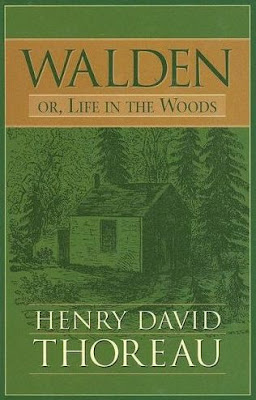
The first such inspirational work in American literature, with major impact, would be Walden (1854) . Henry David Thoreau's journal of his year or so living in a log cabin he builds by a pond in rural Vermont as an attempt at 'voluntary simplicity' became part of the modern American dream, rediscovered in the Sixties as part of the back-to-the-land approach to dropout culture.
 We should also list his 1861 essay collection Walking here. It is the philosophical forerunner of the 'long walk' type of travel book, where the geographic journey is paralleled by an inner one, a journey which clears the mind of non-essentials.
When Thor Heyerdahl's The Kon-Tiki Expedition (1950) was sent to a New York publisher, her famous response was: who wants to read about a bunch of crazy Scandinavians crossing the Pacific on a balsa raft? Of course she could not have been more wrong - it was merely the forerunner of a new genre. The account provided a new way of vicariously experiencing getting back to basics while retracing an 'ancestral' route, and even had a desert-island finale as the raft grounded after 4000 miles on a coral reef near Tahiti.
In US literature Western novels dominate here: the typical hero is a 'saddle tramp', an exemplar of rugged individualism who owns and needs no more than can fit on a saddle, and sleeps by a campfire under the stars. In fact frontier literature went back to the so-called captivity narrative, an early sensational memoir or pseudo-memoir where a ‘civilised’ protagonist is made captive and forced to 'go native' - taking a native wife and so on. This was eventually worked into the conventional 20th-C western in novels like Will Henry's 1950 No Survivors, a pseudo-memoir where the narrator John Clayton (the birth-name of another Simple Lifer better known as Tarzan) is an ex Confederate who lives with the Sioux until dragged into the middle of Custer's last battle, which he survives. (If it sounds familiar it's because the story was later parodied in Little Big Man, and reworked in Dances With Wolves).
The 20th-Century conservation movement began in Canada with the nature writings of Grey Owl, who made the beaver a Canadian national symbol in the 1930s. He was actually an impostor, an Englishman from Hastings called Archie Belaney who after WWI service turned his back on civilisation forever and went to live his life in the Canadian woods as an Ojibwa Indian hunter and trapper. The biography Wilderness Man is the main one of several by his publisher Lovat Dickson, who knew him from his English tours. Grey Owl not only wrote outdoors books like Pilgrims Of The Wild but exploited his colourful image to promote the conservationist cause through gruelling speaking tours, which killed him – he died of exhaustion within days of returning to his log cabin.
Of course in the modern era it isn't practical for most people to go off into the wilderness for extended periods to pursue the simple life. The modern urban variant is the 'bohemian' option, pursued by many a starting writer - living a spare solo existence in a room in a strange town or city to be alone with one's thoughts. An example of this is Jean Paul Sartre's 1938 diary-style existentialist novel Nausea, where the alienated writer-protagonist finds his sojourn alone in a provincial French seaside town leads to an intellectual breakthrough.
There have of course been genuine hermits throughout history, the famous British one being Myrddin The Wild. In 1985 Nikolai Tolstoi (descendant of the Russian novelist) wrote one of those 'in quest of' books searching for the historical figure who inspired the Merlin of the Arthurian Romances. His The Quest For Merlin describes his search for biographical information regarding this 6th C. hermit who, after giving his king some disastrous advice, cast himself away in the Scottish Border Forests to live in a hut with only a piglet for company, where he wrote poetry and struggled to keep his sanity as he was overwhelmed by the awen, the bardic inspiration that can drive men mad.
Fantasy-SF literature has also contributed the idea of time warps whereby a modern civilised type can return to a primitive, perhaps ancestral environment. In England, this is “The Wildwood,” and the classic here, in terms of convincing detail, is a 1984 novel (again written in memoir or journal style) by Robert Holdstock, Mythago Wood. Here the English hero spends months at a time on expeditions exploring a local woodland where a mysterious shamanistic vortex has created a Wildwood where ‘mythago’ (mythic-image) entities survive from Celtic, Saxon and prehistoric eras.
Of course, the token version of 'back to nature' is the modern camping trip, which in literature lends itself to satire (going back to Three Men In A Boat) where the characters are unable to abandon their civilised ways, even briefly. A modern non-fiction example set in wilder surroundings (America’s Appalachian Trail) is humourist-turned-conservationist Bill Bryson's autobiographical 1998 A Walk In The Woods, where the desire for ‘the wilderness experience’ is offset by inability to abandon modern comforts like junk food.
The simple life is a major and increasingly popular theme in literature, and even if you can't live it at the moment, you can still read all about it.
Proceeding chronologically, our top-ten book list would have to start with Defoe's 1719 Robinson Crusoe [free e-text version here], the original 'desert island' novel, based on a true story. Defoe's was a hit inspirational tale of survival, though today it seems somewhat naive in its slightly capitalistic and Christian-evangelist handling of themes of self-reliance and enterprise. The novel, written as if it were a real memoir, started an ongoing desert-island-castaway literary genre (from Swiss Family Robinson to plane-crash survivor stories like Cast Away with Tom Hanks). The list of real-life castaways includes some (like Gerald Kingsland and Lucy Irvine) who got themselves deliberately stranded as a lifestyle experiment (Wikipedia page here). The real-life original of Crusoe, Alexander Selkirk, had done this, and after being rescued lived in a cave on his family property as a hermit until the new-found celebrity created by Defoe's book led to a stream of visitors, which forced him to return to sea, where he perished.
The first such inspirational work in American literature, with major impact, would be Walden (1854) . Henry David Thoreau's journal of his year or so living in a log cabin he builds by a pond in rural Vermont as an attempt at 'voluntary simplicity' became part of the modern American dream, rediscovered in the Sixties as part of the back-to-the-land approach to dropout culture.
 We should also list his 1861 essay collection Walking here. It is the philosophical forerunner of the 'long walk' type of travel book, where the geographic journey is paralleled by an inner one, a journey which clears the mind of non-essentials.
When Thor Heyerdahl's The Kon-Tiki Expedition (1950) was sent to a New York publisher, her famous response was: who wants to read about a bunch of crazy Scandinavians crossing the Pacific on a balsa raft? Of course she could not have been more wrong - it was merely the forerunner of a new genre. The account provided a new way of vicariously experiencing getting back to basics while retracing an 'ancestral' route, and even had a desert-island finale as the raft grounded after 4000 miles on a coral reef near Tahiti.
In US literature Western novels dominate here: the typical hero is a 'saddle tramp', an exemplar of rugged individualism who owns and needs no more than can fit on a saddle, and sleeps by a campfire under the stars. In fact frontier literature went back to the so-called captivity narrative, an early sensational memoir or pseudo-memoir where a ‘civilised’ protagonist is made captive and forced to 'go native' - taking a native wife and so on. This was eventually worked into the conventional 20th-C western in novels like Will Henry's 1950 No Survivors, a pseudo-memoir where the narrator John Clayton (the birth-name of another Simple Lifer better known as Tarzan) is an ex Confederate who lives with the Sioux until dragged into the middle of Custer's last battle, which he survives. (If it sounds familiar it's because the story was later parodied in Little Big Man, and reworked in Dances With Wolves).
The 20th-Century conservation movement began in Canada with the nature writings of Grey Owl, who made the beaver a Canadian national symbol in the 1930s. He was actually an impostor, an Englishman from Hastings called Archie Belaney who after WWI service turned his back on civilisation forever and went to live his life in the Canadian woods as an Ojibwa Indian hunter and trapper. The biography Wilderness Man is the main one of several by his publisher Lovat Dickson, who knew him from his English tours. Grey Owl not only wrote outdoors books like Pilgrims Of The Wild but exploited his colourful image to promote the conservationist cause through gruelling speaking tours, which killed him – he died of exhaustion within days of returning to his log cabin.
Of course in the modern era it isn't practical for most people to go off into the wilderness for extended periods to pursue the simple life. The modern urban variant is the 'bohemian' option, pursued by many a starting writer - living a spare solo existence in a room in a strange town or city to be alone with one's thoughts. An example of this is Jean Paul Sartre's 1938 diary-style existentialist novel Nausea, where the alienated writer-protagonist finds his sojourn alone in a provincial French seaside town leads to an intellectual breakthrough.
There have of course been genuine hermits throughout history, the famous British one being Myrddin The Wild. In 1985 Nikolai Tolstoi (descendant of the Russian novelist) wrote one of those 'in quest of' books searching for the historical figure who inspired the Merlin of the Arthurian Romances. His The Quest For Merlin describes his search for biographical information regarding this 6th C. hermit who, after giving his king some disastrous advice, cast himself away in the Scottish Border Forests to live in a hut with only a piglet for company, where he wrote poetry and struggled to keep his sanity as he was overwhelmed by the awen, the bardic inspiration that can drive men mad.
Fantasy-SF literature has also contributed the idea of time warps whereby a modern civilised type can return to a primitive, perhaps ancestral environment. In England, this is “The Wildwood,” and the classic here, in terms of convincing detail, is a 1984 novel (again written in memoir or journal style) by Robert Holdstock, Mythago Wood. Here the English hero spends months at a time on expeditions exploring a local woodland where a mysterious shamanistic vortex has created a Wildwood where ‘mythago’ (mythic-image) entities survive from Celtic, Saxon and prehistoric eras.
Of course, the token version of 'back to nature' is the modern camping trip, which in literature lends itself to satire (going back to Three Men In A Boat) where the characters are unable to abandon their civilised ways, even briefly. A modern non-fiction example set in wilder surroundings (America’s Appalachian Trail) is humourist-turned-conservationist Bill Bryson's autobiographical 1998 A Walk In The Woods, where the desire for ‘the wilderness experience’ is offset by inability to abandon modern comforts like junk food.
The simple life is a major and increasingly popular theme in literature, and even if you can't live it at the moment, you can still read all about it.
Friday, 7 December 2007
Conan Doyle And The Bohemian Element
In Conan Doyle’s novel The Lost World, the young reporter Malone is told by his beloved Gladys she could never marry a man without the fame and sense of adventure of the sort demonstrated by explorers like Stanley and Burton. So to prove himself, he signs on to accompany the expedition to the ‘lost world’ jungle plateau with its living dinosaurs. After many adventures, he returns successful, to find Gladys has married a solicitor’s clerk.
Whether Conan Doyle was out to prove anything, to himself or the women in his life, is a moot point. He never quite became an explorer, though he had both the physique and the temperament to test himself against challenge and material privation, in what today we would call adventure travel. As he told his mother early on, "I've got a strong Bohemian element in me," he wrote her on one of his early voyages, "and the life seems to suit me."
His wanderlust would have qualified him for membership in the prestigious Travellers Club (where you had to have travelled at least 500 miles in a straight line from London to join) even before he turned 21 and completed his degree.
For while still a medical student, he had travelled to Austria to study, as he would later in life. In his final year of study he signed on as a ship’s surgeon on a whaler bound for Greenland waters. Harpooning sperm whales in boats launched from a sailing ship was a dangerous business (Moby Dick was inspired by a real incident). Doyle also spent days leaping between ice floes, falling in several times while trying to kill seals. He signed on for another voyage, this time to the “White Man’s Graveyard” of the West African coast. While swimming around the ship, he was ‘nearly eaten by a shark’ and the ship caught fire on its return voyage.
In 1892, now a fulltime author, he went on a horseback trip in Norway, visiting a leper colony, and trying to speak Norwegian – something that cost him his horse, which he accidentally gave away.
He was a lifelong sports enthusiast, and it was an 1893 trip to the Swiss Alps to take his consumptive first wife Louisa to a sanatorium that led to his popularising skiing – then not a recognised sport. (A trip to a dramatic local waterfall on this same visit also gave him the idea how, at last, he could kill off Holmes.)
In 1896 he sailed 800 miles up the Nile on a tour boat which was fired upon by disaffected locals, risking capture by hostile Dervishes. He also crossed overland by carriage to visit a remote Coptic monastery on the edge of the Nile Delta.
In 1898, when Kitchener’s army began to advance up the Nile to take Khartoum, he signed up as a war correspondent and travelled south by camel into the Sudan to a desert fort, returning frustrated at the lack of immediate action.
In the Boer War, he tried to sign up as a private, but (being 40) was rejected and so (like Watson) became an Army doctor, saving lives in a typhoid epidemic.
On the voyage home from Africa, he met Bertram Fletcher, who gave him the idea for his 1902 Holmes comeback novel The Hound Of The Baskervilles, with its bleak Dartmoor setting, which he enjoyed exploring on foot, looking for sites which would figure in the story.
In 1902 he also took up ballooning, then flew in a biplane in the hope of making the first parachute jump.
He was also a keen early adopter of the new automobiles and motorbikes, despite a serious crash in 1904 where only his physique saved him from being crushed by his overturned Wolseley tourer. (As well as boxing, cricket, skiing and snowshoeing, he also practiced hill walking and rock climbing.) In 1911, he joined the Royal Automobile Club's racing team in a rally called the Prince Henry Tour, where some forty British drivers raced from Cologne to Southampton to Edinburgh to London against fifty Germans, a contest that nearly ended in a mass brawl when the British team won.
His 1912 The Lost World was partly inspired by his sighting, on his honeymoon cruise in 1907 with his 2nd wife Jean, a sea monster he identified as an ichthyosaurus.
In 1914, he visited the Canadian Rockies, riding, fishing, walking – though now travelling in more comfortable style, for he was now 55.
After the war, he kept travelling, mainly to promote his pet cause of Spiritualism. In 1928 he spent five months travelling around southern Africa, hunting and sightseeing. His final trip was a tour around ‘Protestant’ Europe, which he had to cut short due to chest pains. As a doctor, he knew what that meant, and he confined himself thereafter to his Surrey home ground. Then he went on what as a Spiritualist he regarded as the greatest adventure of all, dying peacefully in his garden in 1930, aged 71.
Today people travel from all over the world to Minstead in the New Forest to visit his gravesite. In 1925, he built a final home near here, where the postman would not deliver letters due to the rumours of strange goings-on - seances and suchlike. But for a fire in 1929, he would’ve died here. His family duly had his coffin and his wife Jean’s relocated here, in the heart of the New Forest, setting of his own favourite among his novels, the mediaeval romance The White Company. His tombstone bears the knightly epitaph “Steel true, blade straight.” This was from a poem by Robert Louis Stevenson, a tribute to his own spouse. Another RLS poem, ‘Requiem,’ might have been equally apt for Conan Doyle: ‘Home is the sailor, home from the sea, And the hunter home from the hill.’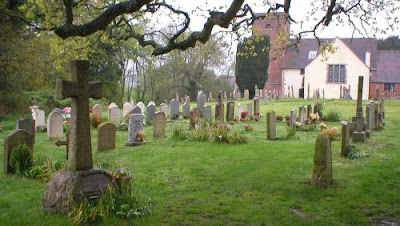
Whether Conan Doyle was out to prove anything, to himself or the women in his life, is a moot point. He never quite became an explorer, though he had both the physique and the temperament to test himself against challenge and material privation, in what today we would call adventure travel. As he told his mother early on, "I've got a strong Bohemian element in me," he wrote her on one of his early voyages, "and the life seems to suit me."
His wanderlust would have qualified him for membership in the prestigious Travellers Club (where you had to have travelled at least 500 miles in a straight line from London to join) even before he turned 21 and completed his degree.
For while still a medical student, he had travelled to Austria to study, as he would later in life. In his final year of study he signed on as a ship’s surgeon on a whaler bound for Greenland waters. Harpooning sperm whales in boats launched from a sailing ship was a dangerous business (Moby Dick was inspired by a real incident). Doyle also spent days leaping between ice floes, falling in several times while trying to kill seals. He signed on for another voyage, this time to the “White Man’s Graveyard” of the West African coast. While swimming around the ship, he was ‘nearly eaten by a shark’ and the ship caught fire on its return voyage.
In 1892, now a fulltime author, he went on a horseback trip in Norway, visiting a leper colony, and trying to speak Norwegian – something that cost him his horse, which he accidentally gave away.
He was a lifelong sports enthusiast, and it was an 1893 trip to the Swiss Alps to take his consumptive first wife Louisa to a sanatorium that led to his popularising skiing – then not a recognised sport. (A trip to a dramatic local waterfall on this same visit also gave him the idea how, at last, he could kill off Holmes.)
In 1896 he sailed 800 miles up the Nile on a tour boat which was fired upon by disaffected locals, risking capture by hostile Dervishes. He also crossed overland by carriage to visit a remote Coptic monastery on the edge of the Nile Delta.
In 1898, when Kitchener’s army began to advance up the Nile to take Khartoum, he signed up as a war correspondent and travelled south by camel into the Sudan to a desert fort, returning frustrated at the lack of immediate action.
In the Boer War, he tried to sign up as a private, but (being 40) was rejected and so (like Watson) became an Army doctor, saving lives in a typhoid epidemic.
On the voyage home from Africa, he met Bertram Fletcher, who gave him the idea for his 1902 Holmes comeback novel The Hound Of The Baskervilles, with its bleak Dartmoor setting, which he enjoyed exploring on foot, looking for sites which would figure in the story.
In 1902 he also took up ballooning, then flew in a biplane in the hope of making the first parachute jump.
He was also a keen early adopter of the new automobiles and motorbikes, despite a serious crash in 1904 where only his physique saved him from being crushed by his overturned Wolseley tourer. (As well as boxing, cricket, skiing and snowshoeing, he also practiced hill walking and rock climbing.) In 1911, he joined the Royal Automobile Club's racing team in a rally called the Prince Henry Tour, where some forty British drivers raced from Cologne to Southampton to Edinburgh to London against fifty Germans, a contest that nearly ended in a mass brawl when the British team won.
His 1912 The Lost World was partly inspired by his sighting, on his honeymoon cruise in 1907 with his 2nd wife Jean, a sea monster he identified as an ichthyosaurus.
In 1914, he visited the Canadian Rockies, riding, fishing, walking – though now travelling in more comfortable style, for he was now 55.
After the war, he kept travelling, mainly to promote his pet cause of Spiritualism. In 1928 he spent five months travelling around southern Africa, hunting and sightseeing. His final trip was a tour around ‘Protestant’ Europe, which he had to cut short due to chest pains. As a doctor, he knew what that meant, and he confined himself thereafter to his Surrey home ground. Then he went on what as a Spiritualist he regarded as the greatest adventure of all, dying peacefully in his garden in 1930, aged 71.
Today people travel from all over the world to Minstead in the New Forest to visit his gravesite. In 1925, he built a final home near here, where the postman would not deliver letters due to the rumours of strange goings-on - seances and suchlike. But for a fire in 1929, he would’ve died here. His family duly had his coffin and his wife Jean’s relocated here, in the heart of the New Forest, setting of his own favourite among his novels, the mediaeval romance The White Company. His tombstone bears the knightly epitaph “Steel true, blade straight.” This was from a poem by Robert Louis Stevenson, a tribute to his own spouse. Another RLS poem, ‘Requiem,’ might have been equally apt for Conan Doyle: ‘Home is the sailor, home from the sea, And the hunter home from the hill.’

Subscribe to:
Posts (Atom)