I was chatting to Manton the other day over a drink, and I said something about how it was a pity that no one could have forseen the collapse in the markets, because if they had, something could have been done to avoid the worst effects of the crash.
He astonished me by pointing out that there were some that had predicted it. He drew my attention to the following article:
Ten People Who Predicted the Financial Meltdown
Of course, as I don't need to tell you, it is troublemakers like these that are actually responsible for talking us into a recession, and that if only they would keep their mouths shut, everything would be fine.
I am relying on you to ensure that their poisonous, seditious nonsense goes no further. Under no circumstances should you allow others to be exposed to such negative thinking.
I know you won't let me down.
Friday, 7 November 2008


Saturday, 1 November 2008
In The Heart Of The World
We were sitting around the fire in the club lounge the other evening, and the talk turned, inevitably, to exploring, in particular what we used to call the Mysterious East. It has a special appeal for many even today, when the maps have no more blank spaces. For its ancient ways offer a counterpoint to Western capitalism and materialism which is particular appealing when these Western philosophies are shown to be hollow and manipulative in times of economic crisis. In the old days, when Asia’s vast mountainous interior was largely unexplored, its mystery, its lure, stirred many to go off exploring, excited at the prospect of discovering who knows what – Shangri-La, or perhaps the Abominable Snowman. A few were simply drawn to its mysteries like moths to a flame, for reasons they themselves could scarcely articulate, and often either never returned, or returned forever changed.
One of these was a British explorer who came to be called by his biographer “the last great imperial adventurer”. His brash early geographic explorations through the heart of Asia led to him later exploring his own heart for the lessons that might be learned from the ancient wisdom of the East.
Although born in India, he was packed off back to England to be raised by two religious aunts. After attending Clifton College in Bristol, Francis Younghusband joined the Army for the same reason many did at that time – the opportunity for adventure abroad. Inspired by his uncle, a noted explorer of Central Asia, Younghusband became in 1886-7 the first European since Marco Polo to cross China and Asia. The young subaltern travelled through Manchuria to Peking and into Mongolia, crossing the Gobi Desert and the Himalayas to India. For this remarkable feat, the Royal Geographic Society not only gave him a gold medal but elected him as their youngest member, age 24.
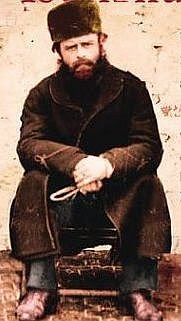 He transferred to the Political Service and got involved in what Kipling in his novel Kim would call "The Great Game." This was the contest between Britain and Russia for political control over the lands beyond India’s North-West Frontier. After discovering the source of the river after which India is named and nearly having war with Russia break out when he was reported killed, Younghusband was despatched to Tibet at the head of British military mission.
In 1904, his friend Lord Curzon, Viceroy of India, sent him in to show the flag as part of the political Great Game. There in his zeal, Younghusband exceeded his instructions, leading to the massacre of a Tibetan militia army. In the capital Lhasa, he intimidated the Dalai Lama into signing an impromptu anti-Russian alliance treaty with Britain (later repudiated by an embarrassed Whitehall, which was pretending neutrality). But while his men looted the Potala Palace and the monasteries, his own time in Tibet became the turning point of his life. In the mountains he had a spiritual experience, a mystical revelation about the oneness of humanity and religion, which would change his formerly evangelical-Christian outlook into an Oriental mystical one. (In Whitehall parlance, they called this ‘going native.’)
Although invested with the title of Knight Commander for his “conquest” of Tibet, Sir Francis turned from the sword to the pen, becoming a writer and propagandist for his beliefs. Instead of serving the cause of Empire, he felt he would instead serve the cause of humanity’s spiritual development. During the First World War, he sailed to America with Bertrand Russell to lecture in philosophy. He then commissioned the song which would become Britain’s popular “alternative” anthem, Jerusalem, based on Blake’s mystical verse, but refused to let it be used to promote wartime jingoism. (He even thought the Boy Scouts too militaristic.)
After the war, he became President of the Royal Geographic Society, and organised several reconnaissance expeditions following his 1904 Tibet route, this time right across Tiber to the Chinese border to explore Mt Everest, named after a British official, but known more reverently by Tibetans as Chomo-Lungma, the ‘Mother Goddess Of The World.’ It was on one of these expeditions to the “roof of the world” that two famous colleagues of his failed to return, their fates a mystery, when Mallory and Irvine vanished near the summit in 1924. He himself turned to inner exploration, and became a mystic admired by Bertrand Russell and HG Wells. He explored esoteric ideas like telepathy and the existence of superior extraterrestrial life forms, writing a score of books on spiritualist beliefs which anticipated those of the 1960s, with titles like The Heart Of Nature (1921), Mother World (1924), Life In The Stars (1927), and The Living Universe (1933).
In 1936, he attempted to reduce religious differences by establishing the World Congress of Faiths as war clouds again gathered over Europe and Asia. (His former house-maid Gladys Aylward was caught up in this, she having become a missionary in China just before the Japanese invasion, an event depicted in her filmed biography, The Inn Of the 6th Happiness.) The American aviator Lindbergh, an antiwar activist also interested in matters spiritual after the kidnapping and death of his baby, personally flew him across India, whose independence he long supported. But though he admired Gandhi, he was not entirely ascetic. In fact, he also preached free love, criticizing marriage as an outdated custom. Until his death, he lived with Lady Madeline Lees, who with her husband had co-founded a Christian commune at South Lytchett Manor in Dorset. Having forsaken his wife, he spent part of his last few years with his much younger companion at her manor house on the north side of Poole Harbour. He died at the Manor during WW2, of a stroke.
 You can visit his grave in the quiet country churchyard of Lytchett Minster, across the fields from the Manor, next to an ancient yew tree and under a headstone with a carved image of the Dalai Lama’s palace in Lhasa.
One of these was a British explorer who came to be called by his biographer “the last great imperial adventurer”. His brash early geographic explorations through the heart of Asia led to him later exploring his own heart for the lessons that might be learned from the ancient wisdom of the East.
Although born in India, he was packed off back to England to be raised by two religious aunts. After attending Clifton College in Bristol, Francis Younghusband joined the Army for the same reason many did at that time – the opportunity for adventure abroad. Inspired by his uncle, a noted explorer of Central Asia, Younghusband became in 1886-7 the first European since Marco Polo to cross China and Asia. The young subaltern travelled through Manchuria to Peking and into Mongolia, crossing the Gobi Desert and the Himalayas to India. For this remarkable feat, the Royal Geographic Society not only gave him a gold medal but elected him as their youngest member, age 24.
 He transferred to the Political Service and got involved in what Kipling in his novel Kim would call "The Great Game." This was the contest between Britain and Russia for political control over the lands beyond India’s North-West Frontier. After discovering the source of the river after which India is named and nearly having war with Russia break out when he was reported killed, Younghusband was despatched to Tibet at the head of British military mission.
In 1904, his friend Lord Curzon, Viceroy of India, sent him in to show the flag as part of the political Great Game. There in his zeal, Younghusband exceeded his instructions, leading to the massacre of a Tibetan militia army. In the capital Lhasa, he intimidated the Dalai Lama into signing an impromptu anti-Russian alliance treaty with Britain (later repudiated by an embarrassed Whitehall, which was pretending neutrality). But while his men looted the Potala Palace and the monasteries, his own time in Tibet became the turning point of his life. In the mountains he had a spiritual experience, a mystical revelation about the oneness of humanity and religion, which would change his formerly evangelical-Christian outlook into an Oriental mystical one. (In Whitehall parlance, they called this ‘going native.’)
Although invested with the title of Knight Commander for his “conquest” of Tibet, Sir Francis turned from the sword to the pen, becoming a writer and propagandist for his beliefs. Instead of serving the cause of Empire, he felt he would instead serve the cause of humanity’s spiritual development. During the First World War, he sailed to America with Bertrand Russell to lecture in philosophy. He then commissioned the song which would become Britain’s popular “alternative” anthem, Jerusalem, based on Blake’s mystical verse, but refused to let it be used to promote wartime jingoism. (He even thought the Boy Scouts too militaristic.)
After the war, he became President of the Royal Geographic Society, and organised several reconnaissance expeditions following his 1904 Tibet route, this time right across Tiber to the Chinese border to explore Mt Everest, named after a British official, but known more reverently by Tibetans as Chomo-Lungma, the ‘Mother Goddess Of The World.’ It was on one of these expeditions to the “roof of the world” that two famous colleagues of his failed to return, their fates a mystery, when Mallory and Irvine vanished near the summit in 1924. He himself turned to inner exploration, and became a mystic admired by Bertrand Russell and HG Wells. He explored esoteric ideas like telepathy and the existence of superior extraterrestrial life forms, writing a score of books on spiritualist beliefs which anticipated those of the 1960s, with titles like The Heart Of Nature (1921), Mother World (1924), Life In The Stars (1927), and The Living Universe (1933).
In 1936, he attempted to reduce religious differences by establishing the World Congress of Faiths as war clouds again gathered over Europe and Asia. (His former house-maid Gladys Aylward was caught up in this, she having become a missionary in China just before the Japanese invasion, an event depicted in her filmed biography, The Inn Of the 6th Happiness.) The American aviator Lindbergh, an antiwar activist also interested in matters spiritual after the kidnapping and death of his baby, personally flew him across India, whose independence he long supported. But though he admired Gandhi, he was not entirely ascetic. In fact, he also preached free love, criticizing marriage as an outdated custom. Until his death, he lived with Lady Madeline Lees, who with her husband had co-founded a Christian commune at South Lytchett Manor in Dorset. Having forsaken his wife, he spent part of his last few years with his much younger companion at her manor house on the north side of Poole Harbour. He died at the Manor during WW2, of a stroke.
 You can visit his grave in the quiet country churchyard of Lytchett Minster, across the fields from the Manor, next to an ancient yew tree and under a headstone with a carved image of the Dalai Lama’s palace in Lhasa.
Sunday, 12 October 2008
Manton's Seppuku Puzzle
The Diogenes Club was strangely quiet when I walked into the grand entrance hall. As I shrugged off my coat, I noticed through the open doorway that there were far fewer members in the dining room than was normal, and what conversations there were, were somewhat muted. The first chill of winter was in the air, but I didn't think that was the reason for the poor turn out.
"It's quiet today, Henry." I said, as he took my scarf and gloves.
"Indeed, sir."
"Are any of the others here yet?"
"Just Mr Manton, sir. Mr Abrahams and Mr Treworthy have telephoned to say that they may be a little late."
"Did they say why?"
"In Mr Treworthy's case, an emergency board meeting - he indicated that due to some innovative corporate investments in certain European banks, some question marks had arisen over the company's short term cash-flow."
"Hmm. I don't know about you, Henry, but I always get worried when the words 'innovative' and 'investment' crop up in the same sentence."
"Quite so, sir."
"And Mr Abrahams?"
"He didn't say, sir. Your usual drink, sir?"
"Yes please, Henry. And one for Mr Manton."
"Yes sir."
I walked into the warmth of the library. It was just the same, one fixed point in these uncertain times. A warm fire, the walls lined with books, and large armchairs with side tables.
"Hello Manton." I said, as I eased myself into the chair next to him.
"Thank God you're here," said Manton, throwing his newspaper aside with unnecessary venom. "that bloody thing was driving me mad."
"You don't usually have that much trouble with the Times Crossword."
"Oh, I finished that in about fifteen minutes. I was so bored that I was reduced to having a go at one of those bloody Seppuku puzzles."
"I think you mean Sudoku. Seppuku is an act of ritual suicide by cutting open one's stomach, otherwise known as hari-kari."
"I know exactly what I mean. The damn things could be solved by a computer. At least a good crossword has a bit of wit, some...some soul. And you might end up learning a few new words."
Henry arrived with our drinks.
"Cheers, old man." said Manton, gulping down the remains of his existing glass before taking the one that I had bought for him. "No word from Abrahams, Henry?"
"Nothing further, sir."
"Oh well, it looks like it's just you and me today, old boy."
"What about Travis?"
"I don't we'll be seeing him for a while. I suspect that global economic meltdown and the possible end of capitalism might be occupying his time at the moment. Mind you, it's something that will affect us all."
"Yes - it all seems a bit abstract to me, to be honest. I haven't really got any money to speak of. I manage to pay my mortgage and taxes and have a bit left over to buy the occasional book or shiny disk, but that's about all. You don't seem too bothered by it, Manton."
"Oh, it bothers me alright. I'm just not very surprised. I've been waiting for this to happen for the last thirty years."
"What do you mean?"
"Ever since I read one of Galbraith's books. Didn't you have a look at that film that I told you about?"
"The money as debt thing? No, not yet. Been a bit busy."
"Well, it essentially explains what a bank is, and how it creates money."
"I thought Government's created money, in the mint."
"Only a small amount. Most money is created by banks, which, don't forget, are private corporations."
"Yes, but it's backed up by the deposits of the customers, isn't it?"
"No, they just create it out of thin air."
"You're kidding." I laughed, but Manton's face was deadly serious.
"Not at all. The film uses the story of the Goldsmith's Tale, to try and explain how banking got started.
For a long while, people used all sorts of things as money. Shells, stones, bushels of wheat, pieces of gold. As long as everyone had faith that it could be exchanged for things that people wanted, like food, there was no problem."
"Of course. We learned that sort of thing at school."
"Really - the British education system has clearly improved since my day.
Anyway, once upon a time, around the fifteenth century, in place like Venice, or Amsterdam or London, there lived a goldsmith. As well as jewellery, he made coins, which people liked because they were a convenient way of carrying around their wealth. Of course, he needed to keep his wares safe, so he built himself a vault.
Pretty soon. other townspeople were knocking on his door, because they wanted to rent space in his vault so that they could keep their own valuables safe as well.
The goldsmith was soon renting out all the space in his vault, and making a nice little profit into the bargain. After a few years the goldsmith realised something quite important. People rarely came in to take their gold out of the vault - and if they did, they didn't all do it at the same time. Any idea why?"
I took a sip from my whisky. "No, not really."
"It was because every time someone deposited some gold in his vault, the goldsmith had given them a receipt. A paper claim note that they could use to claim back their gold."
"And the paper claim notes were being used in the market place to buy and sell things, as if they were the gold itself." I exclaimed, triumphantly.
"Exactly. Bank notes. Paper money. It was quite a radical idea."
"And so that is why a bank note 'promises to pay the bearer on demand'."
"Yes - notice that it doesn't say what they will pay you in, though."
I got a fiver out of my wallet, and studied it carefully. "No, you're right. I suppose I had always assumed they would give you... I don't know, gold coins, or something."
"I'm afraid things have moved on since then. You see, the goldsmith decided to start up a new business. He decided to lend out his gold to people who needed it, in return for a payment, which he called interest. The longer you wanted to borrow some of his gold for, the more interest you had to pay. Because his paper claim notes were in such widespread use, people asked for their loans to be paid to them in claim notes, instead of the actual gold."
"Well, that doesn't seem to bad."
"No, I agree. But, as the country got richer, and industry expanded, more and more people started to ask the goldsmith for loans, and this is when he had another brainwave. Because hardly any of his depositors ever asked for their gold back, he decided to make loans based on their gold, as well as his own."
"Hang on, that's a bit cheeky. Did he ask for their permission?"
"Well, not as such. After all, as long as the loans were always repaid, the depositors would be none the wiser, and no worse off. And he would make a much larger profit than he would otherwise be able to with just his own gold."
"I know, but he's taking a bit of a risk."
"Well, as they are always saying on the news, the economy grows because of risk takers. The spirit of the entrepreneur and all that." Manton took a mouthful from his glass. "At least, they used to. You only get the occasional hedge fund manager with a death wish saying it now."
"So what happened next?"
"The goldsmith grew hugely wealthy, far more than his fellow townsmen. You know the sort of thing. Several villas, each with their own retinue of servants, and a holiday home at the coast. His own private yacht. A huge collection of carriages, and horses to pull them. The finest clothes."
"But... he wasn't really doing anything, was he. Not really."
"Funnily enough, that's what the other townspeople thought. Rumours grew that he was actually spending his depositors' gold. One day, they turned up at his vault and threatened to withdraw their gold unless he told them where his wealth was coming from.
He showed them the vault and they could see that their gold was still safe - but they still weren't satisfied, so he told them that he had been making loans based on their gold as well as his own. They demanded a cut of the action, and so the goldsmith agreed to pay them a share of the interest that he was earning on the loans based on their gold."
"Well, that does seem fairer. After all it's their gold."
"Indeed. And that was how banks started. The bank would make loans which were guaranteed by the depositors' gold that was held in the vaults, and charge a high interest to the lender. Instead of being able to pocket all of that interest, the goldsmith now had to pay some of it on to the depositors whose gold he was looking after, but he paid them a lower rate of interest, and used the difference to pay for the costs of running his bank - which obviously included his own salary. And the occasional bonus."
"Well, villas in the south of France don't pay for themselves, Manton."
"How true, how true. Those are very wise words." He looked at his empty glass. "I think it's my round isn't it? HENRY!"
As Henry brought the drinks over, I thought about what Manton had said.
"That's all very well, but none of this really explains what is going on at the moment."
"Well, I haven't finished yet. You see, most people think that this is how the banks operate today. That they make loans, based on their depositors' money, for which they charge high interest rates, and pass on some of the interest to their depositors. But the goldsmith - actually, I think we had better start calling him a banker now - the banker had another brainwave."
"I'm starting to get a bad feeling every time that happens."
"You see, the banker wasn't content with the amount of interest that was left after he had paid off his depositors - and the need for credit was growing - great expeditions were being sent out to explore the recently discovered continent of America, and there was much growth in new industries. There wasn't enough money available for everyone that wanted some."
"Why not?"
"Because it was tied to the amount of gold in the banker's vaults. Whether it was his gold or his depositors gold, there was still only a fixed amount."
"So what did he do?"
"It was a stroke of genius. Because he was the only person who knew how much gold was actually inside the vault, and because he knew that his depositors would never want to withdraw all of the gold at the same time, he realised that he could issue claim notes on gold that didn't even exist!
So long as he didn't get too many people wishing to claim back their gold at any one time, how would anyone ever find out?"
"What!?" I spluttered, whisky spilling over my waistcoat as I tried to stop choking.
"I know, it's breathtaking isn't it."
"He can't do that! It's illegal. It's .... it's..... how can he do that? It's outrageous!"
"That's precisely why the scheme worked - and rather well, as it turned out. Needless to say, the banker became even more incredibly wealthy than he already was."
"I'm not surprised. It's one thing to get interest for loaning out his own gold, or even his depositors gold, but making interest for loaning out gold that doesn't actually exist.... of course, he doesn't have to pass on any of that interest to despositors, does he. Because the gold doesn't exist, the depositors don't exist."
"Precisely."
"It's a damn sight more risky now, though. Not only might he have to pay out his own gold, or even his depositors gold - he might have to pay out gold that he doesn't have. That he has never had."
"But people hardly ever want to claim their gold - certainly not at the same time. Well, not usually."
"Well, if I had been him, I would have been bloody careful not to draw attention to myself. He'd have to scale back on his ostentatious spending - if anyone suspected foul play and called his bluff, the whole thing would come crashing down."
"Yes, you'd think so. For a long time the idea that the banker was creating money out of nothing was so outrageous, it did not occur to people that this might be what was going on.
Of course, the power to just invent money went to the bankers head, as you can well imagine. He just bought more 500 room mansions, art collections and so on. He would spend, on one suit of clothes, what another person might spend on food in an entire year."
"But didn't he see how dangerous that was - if only out of a sense of self-preservation?"
"It seems not. Of course, the inevitable happened, and in time, the bankers ostentatious wealth triggered suspicions amongst the townspeople once again.
Some borrowers started to demand real gold, instead of paper claim notes, when they took out their loans. More rumours spread.
Suddenly, several wealthy depositors turned up to withdraw their gold. The game was up. A sea of claim cheque holders surrounded the bank, all wanting to get their gold out. The banker had to close the bank because, of course, he didn't have enough gold in his vaults to redeem all of the paper claim notes that he had put into circulation."
"And people realised that their paper claim notes were worthless."
"It was the first run on a bank. It is what every banker dreads. Not just because it can ruin an individual bank, but more importantly, because it shakes confidence in the very idea of a bank."
"Yes, but after this run happened, everyone could see how dangerous it was. I mean, the government must have outlawed the practice of creating money out of absolutely nothing. It's just plain madness. It's never a good idea to live beyond your means."
"Well the government could have done that. Unfortunately, the large amounts of credit that the banks were offering had become essential to the success of European commercial expansion - and also essential to the political success of whoever was running the country at the time. You wouldn't last long in power if your opponents could promise to make the country more wealthy than you.
So instead, the practice was legalised, and regulated. Bankers agreed to abide by limits on the amount of fictional loan money that could be lent out. The limit would still be much larger than the amount of actual gold and silver in the vault though. Usually the limit was 9 to 1. The bank agreed to only lend out 9 dollars for every 1 dollar of gold that they had in their vault."
"And the government trusted them?"
"No, the rules were enforced by having surprise inspections of banks. It was also arranged that every country would have a central bank. If a local bank experienced a bank run, the central bank would support it by sending it extra consignments of gold to enable them to pay their depositors."
"And that's what the Bank of England does here, and the Federal Reserve Bank in America?"
"Got it in one. The central bank is the lender of last resort.
As I've said, it was very unlikely that all the depositors would wish to withdraw all of their funds at the same time, unless the bankers did something incredibly stupid, like accumulating enough wealth to make even King Midas himself blush.
And it was even more unlikely that all of the local banks would need extra reserves from the central bank at the same time, unless they did something even more incredibly moronic like spending lots of money on 'financial packages' based on the American mortgage market when they have no idea of how much risk is tied up in them."
"That wouldn't just bring one bank down, would it - that would bring all the banks down. Including the central bank."
"That's right."
I sat quietly and thought for a while. The logs crackled in the grate, interrupted only by the slow, regular sound of the Grandfather clock.
"I think I'll get very, very drunk tonight."
"Capital idea, old man. I usually end up thinking I'll get very, very drunk every night, but that's mostly due to my ex-wife. Mind if I join you?"
"The more the merrier." I finished off my glass, flinching as it hit the back of my throat. "So is that how the system operates now?"
"No, not quite. It's even more terrifyingly divorced from reality now, but I think we need to have considerably more pure malt whisky inside us before I go on, or you'll never believe me."
At that moment, Abrahams came into the room waving a newspaper. "Have you heard?"
"My God, Abrahams, where did you spring from?" said Manton, trying to not to spill any more of his whisky.
"It's completely unprecedented. Unheard of."
"What is? What the devil are you talking about?" said Manton.
"It says here, the US Treasury Department, for the first time in its history, is to begin selling bonds for the Federal Reserve in an effort to help the central bank deal with its unprecedented borrowing needs. Treasury officials said the action did not mean that the Fed was running short of cash, but simply was a way for the government to better manage its financing needs."
"Manton," I said, "you said the central bank is the lender of last resort. That's what is stopping the whole thing from collapsing. If they need to borrow from someone else...."
"HENRY! Bring the bottle. It's going to be a long night."
Friday, 3 October 2008
What is Money?
The other day, a fellow Diogenerian, a wise and learned man, asked me a question:
What is money?
It is a question that has arisen amongst fellow members before, as detailed here.
Like all good questions, it is very simple.
The answer, it would appear, is also simple.
Money is debt. And more importantly, debt is money.
And before you ask, that isn't one of the quotes that George Orwell attached to the walls of the Ministry of Truth - it is the message put forward by this film, which has been split up into 5 ten minute clips.
http://www.youtube.com/watch?v=ThXpjmfyiMQ
http://www.youtube.com/watch?v=sanOXoWl0kc
http://www.youtube.com/watch?v=kTv1fo6sKmo
http://www.youtube.com/watch?v=3qicabStQkc
http://www.youtube.com/watch?v=7kpSbkaD4tM
I should warn you that it has clearly been made by some left-wing lunatic - witness the cheap, cartoon-like graphics - and furthermore, someone who doesn't understand the extremely complex nature of the global economic system, which is monitored and controlled by extremely intelligent men and women, who deserve every penny of the extremely large salaries and bonuses that they receive.
I will say that it summarises my understanding of the global money markets, arrived at after many years of thought.
I don't really want it to be true, so if anyone who is more knowledgeable in these matters can point out the logical flaws in the arguments put forward, I would be extremely grateful.
Thursday, 2 October 2008
Going, Going, Gone!
Another extract from Robert Peston's blog on the BBC website:
I'm sure that there is no need to worry about the fact that this was a largely unregulated market.
Regulators just get in the way, with their fussing around, needlessly checking up on trivial things like: "Has the underwriter actually got enough money to pay out on all the claims that may be made upon it?"
And if those companies should find out that their insurance policies are worthless, well, it's not the end of the world.
Indeed, the really clever ones will not only have an insurance policy to protect them from their customers defaulting on their debts, they will have another insurance policy to compensate them in the unlikely event that their first insurance policy proves to be worthless.
And the really, REALLY clever ones will have yet another insurance policy to protect them from the even more unlikely event that THAT insurance policy should fail.
And so on. And on.
So the chances of actually having to pay out on THOSE insurance policies are so incredibly remote, it makes perfect sense to take on as much of that business as you can, because you will never have to pay out on it. There's no need to have any capital in reserve, because it will never be needed. You could, instead, pay it as bonuses to your executives. It's a licence to make money. People just pay you to do nothing.
Of course, you are in trouble if there IS a claim, because you can't pay it - which means that the next company won't be able to pay out on their (bigger) claim, which means that the next company won't be able to pay out on their (even bigger) claim.
And so on. And on.
Which means that a lot of companies might find out they have got less money than they think they have.
But that's ok.
They should be getting used to that by now.
And now for the complicated and scary stuff. Today is the beginning of "auction season", when the International Swaps and Derivatives Association starts a series of auctions to settle who pays what to whom on a plethora of credit derivative contracts relating to businesses that have gone into default.
It's settlement time on those humungous insurance policies for corporate debt, called credit default swaps. [...]
In the coming three weeks, payouts of hundreds of billions of dollars may be made - or at least demanded - to cover losses arising from the defaults on the debt of Fannie Mae, Freddie Mac, Lehman and Washington Mutual. [...]
Now the problem here is that for every beneficiary of these payments, there's an underwriter - those who provided the CDS insurance - which has to find the cash.
I'm sure that there is no need to worry about the fact that this was a largely unregulated market.
Regulators just get in the way, with their fussing around, needlessly checking up on trivial things like: "Has the underwriter actually got enough money to pay out on all the claims that may be made upon it?"
And if those companies should find out that their insurance policies are worthless, well, it's not the end of the world.
Indeed, the really clever ones will not only have an insurance policy to protect them from their customers defaulting on their debts, they will have another insurance policy to compensate them in the unlikely event that their first insurance policy proves to be worthless.
And the really, REALLY clever ones will have yet another insurance policy to protect them from the even more unlikely event that THAT insurance policy should fail.
And so on. And on.
So the chances of actually having to pay out on THOSE insurance policies are so incredibly remote, it makes perfect sense to take on as much of that business as you can, because you will never have to pay out on it. There's no need to have any capital in reserve, because it will never be needed. You could, instead, pay it as bonuses to your executives. It's a licence to make money. People just pay you to do nothing.
Of course, you are in trouble if there IS a claim, because you can't pay it - which means that the next company won't be able to pay out on their (bigger) claim, which means that the next company won't be able to pay out on their (even bigger) claim.
And so on. And on.
Which means that a lot of companies might find out they have got less money than they think they have.
But that's ok.
They should be getting used to that by now.
Wednesday, 1 October 2008
What Was The Derivatives Market, Daddy?
As I have mentioned in previous entries, it is important, in these times of financial crisis, that we don't give in to gloom and despondency.
An article has come to my attention that starts with the following paragraph:
I feel that the last sentence is unnecessarily inflamatory, and I would urge everyone to make sure that they do not read the article
http://www.financialsense.com/fsu/editorials/amerman/2008/0917.html
under any circumstances, as it provides a clear explanation of the derivatives market, and so could create panic and despondency amongst the general populace.
And whatever you do, don't let your wives, children or servants read it either. These things are far to complex for them to understand, and there is no need to worry them unnecessarily.
I know you won't let me down.
An article has come to my attention that starts with the following paragraph:
While it may look superficially similar to the recent implosions of such investment giants as Fannie Mae, Freddie Mac and Lehman, the takeover and bailout of AIG is quite different, and means that the market is entering the next and even more dangerous phase. What is driving the fall of AIG – and potential government losses that may far, far exceed the $85 billion bailout announced late on September 16th - is not mortgages or real estate (directly), but fears that AIG’s huge, global credit-default swap positions will unravel. The $62 trillion dollar credit derivatives market is 50 times the size of the subprime mortgage derivatives market, and is indeed larger than the entire global economy.
I feel that the last sentence is unnecessarily inflamatory, and I would urge everyone to make sure that they do not read the article
http://www.financialsense.com/fsu/editorials/amerman/2008/0917.html
under any circumstances, as it provides a clear explanation of the derivatives market, and so could create panic and despondency amongst the general populace.
And whatever you do, don't let your wives, children or servants read it either. These things are far to complex for them to understand, and there is no need to worry them unnecessarily.
I know you won't let me down.
Sunday, 28 September 2008
A Case Of ‘Bloggins’
We were sitting around discussing Britain’s chances in the next Olympics when young Pinker suddenly asked, “I say, whatever happened to H--- , haven’t seen him for ages.”
“Went gallivanting off abroad. Said he wasn’t allowed to tell anyone where he was going. Probably too embarrassed to come back now, or banged up in some hellhole. Another case of ‘Bloggins,’ I’m afraid,” said Moreton.
“Bloggins? What’s that? Is it like Parkinson’s?” asked Pinker.
There was a slightly embarrassed silence, then finally Moreton explained, “Not exactly, more a type of mania I suppose. Well, I better tell you the story. For a start, ‘Fred Bloggins’ wasn’t his real name. It was a matter of “pas devant les domestiques.” We used a – what do you call it – a pseudonym when talking about it to spare the feelings of his mother, who worked here in the kitchen for many years after her husband died young, prematurely worn out from his time in trade. You may recall her duck a l’orange at Christmas. And of course her plum puddings were magnificent.”
“Hear hear!” said old Ferraby, but Moreton, who didn’t suffer fools gladly, just gave him one of his looks.
“Bloggins’s undoing was reading too many spy stories, for he had an overactive imagination, and he would sit up half the night, convinced they were based on fact, and that everyone was either one of our agents, or a foreign spy. He said he just knew the Club had been set up as a front for the Secret Service. It simply didn’t register with him that it would be overly obvious, and unnecessary (there being already many other clubs with members involved with foreign travel and exploration). He had joined because he had heard nobody was allowed to talk on Club premises, and he thought, Aha, that must be to stop anyone revealing secrets!
“He soon found out the silence rule had only applied to the front lounge when it became an extension to the Club library, holding the latest periodicals. But he would sidle up to some group having a quiet conversation in one of the back rooms, and try to insinuate himself into it. When that got him nothing but the cold shoulder, he decided everyone was talking in a secret code he hadn’t been initiated into yet. The fact that to preserve confidentiality, every member has a Club name taken from myth or literature didn’t help. He was convinced these Club membership names were Secret Service agent code names.
“Above all he craved “action.” He would propose expeditions abroad, saying it just wasn’t good enough, all these fellows sitting around when the world was going to hell in a handbasket. “Look at these newspaper headlines,” he would say, “China, Africa, Asia. Time to get out there and set the world to rights, just like Diogenes would have done.” He was told that if he had bothered to do any research, he would learn Diogenes did no such thing, and spurned politics. Also, the Club could not finance such expeditions. Engaging in political activity was against the Club’s charter, its viability depending on the tax deductions it got as a registered charity.
So he changed tack and began trying to get himself included in others’ plans to go on archaeological field trips abroad and the like. “I know what really goes on,” he would say, tapping the side of his nose. This approach gave some the wrong idea. As Ellis delicately put it, “Well, he’s certainly not sharing a tent with me.”
“He would puff himself up and lecture the others on their lack of moral character. “You chaps can waste your life away lazing about,” he would say, “me, I’m made of sterner stuff. There comes a time a real man needs to stand up and be counted. Of course, you need someone to show you the way, give you the idea, that’s my role.” Other members began avoiding him, not wanting to listen to what Simons called this pious piffle. Someone gave him a copy of Don Quixote for Christmas, but he didn’t get it, and was seen underlining key words looking for the secret code.
“It was now obvious he was so naïve he’d believe anything as long he could see evidence of a vast conspiracy – you know, “people in low places, people in high places, their names would astound you” – that sort of thing. It was only a matter of time before someone saw an opportunity to exploit his mania for their own ends. No-one wanted to play Sancho Panza to his Don Quixote, but Carstairs thought Bloggins himself would make a useful Sancho Panza in some convenient cause.
Carstairs was what they euphemistically refer to as “Foreign Office.” There’s someone like that in every Club, dues paid by the Foreign or Home Office, to keep a weather eye on members. Carstairs took him aside one day and told him tales that had Bloggins’s hair standing on end. After that, at least he clammed up. But soon he was hinting he was going abroad. “Hush-hush, can’t talk about it,” he would tell everybody who would listen, “the walls have ears, you know. They have spies everywhere. No one is above suspicion.” And with that, he went.
“The following year the Secretary received a letter from the Consul in some remote flybitten hellhole. Bloggins had lost his papers, but claimed he worked for “a certain department in Whitehall.” He gave his address as the Club, and said they knew all about it. The Club Secretary replied he was certainly not there on Club business. The Foreign Office naturally denied all knowledge of his presence in the country. Details were few, but apparently he had tried to organise an uprising against the big American mining company there. He had told the locals they were being enslaved and should fight to be free, like Englishmen. He had made speeches that managed to offend everyone. “Like a bull in a china shop,” the Consul wrote.

“After one especially insensitive speech about the locals’ treatment of women, there was a riot, and he had to flee over the border. There was a woman behind this of course. “Cherchez la femme,” as Carstairs would say. Bloggins had met this native girl who wanted him to take her back to England with him. She had helped him across the frontier, and he had promised to marry her and make her an English lady. Complications had ensued when it emerged she was only about thirteen. He then said he wanted to adopt her, and she could stay with him in Streatham, where he had a small flat. “I’m going to save her soul,” he said.
“But the local missionaries weren’t having any of that, and sent her back to her family. He himself had malaria and goodness knows what else, and couldn’t travel. But one day he disappeared from the mission hospital, and it emerged he had hitched a lift on a mission supply lorry and crossed the border again. Looking for the girl of course. Said he wanted to save her from a life of servitude. “I’m on a mission too,” he told the local church mission driver, “You see, I can teach her modern western ways, enlighten the poor benighted thing.”
“But he didn’t speak the local lingo, and just wandered about lost in a wretched state, pestering the locals, until he was arrested and accused of being a British spy and agent provocateur. He cracked up totally at this and began laughing hysterically. “The Foreign Office will tell you they’ve never even heard of me,” he laughed. “And as for the church, well, you know the Bible is really written in code, but it’s all been covered up,” he added knowingly. They soon decided he was one of those harmless cranks who waste police time with their attention-seeking behaviour, and despatched him to the mission-run sanatorium.
“Then one day two years on, he turned up again, having staggered off a tramp steamer at Southampton. On his return, he found he had been reported killed, declared legally dead, and was now homeless and penniless. Too proud to turn to his widowed mother for help, he ended up living in the park. He had a sort of shelter there in the bushes, and each morning would scavenge food scraps thrown out by the hotel across the way. It was ironic that finally here he was doing something in the style of the original Diogenes. We saw him less and less, until one day he was just gone for good. He would never talk about what happened in any case. “Mum’s the word,” was all he would ever say, tapping the side of his nose and smiling.
Subscribe to:
Posts (Atom)